


The box is usually the first surprise. A House of Miniature Maileg doesn't arrive like a small nursery accessory. It lands as a serious flat-pack project, large enough to make you reconsider the shelf you had in mind and heavy enough that children shouldn't be expected to carry it. Before the first mouse gets a bed, you'll need a plan for placement, scale, assembly, and the accessories that will make the rooms feel lived in.
My recommendation is clear: treat this as a modular miniature home, not a decorative prop. Start with the structure, buy only compatible pieces, and style one room at a time. If you're ready to create a lasting play space, explore the Maileg collection at NINI and LOLI before choosing your first furniture and figures.
Bringing the House of Miniature Home
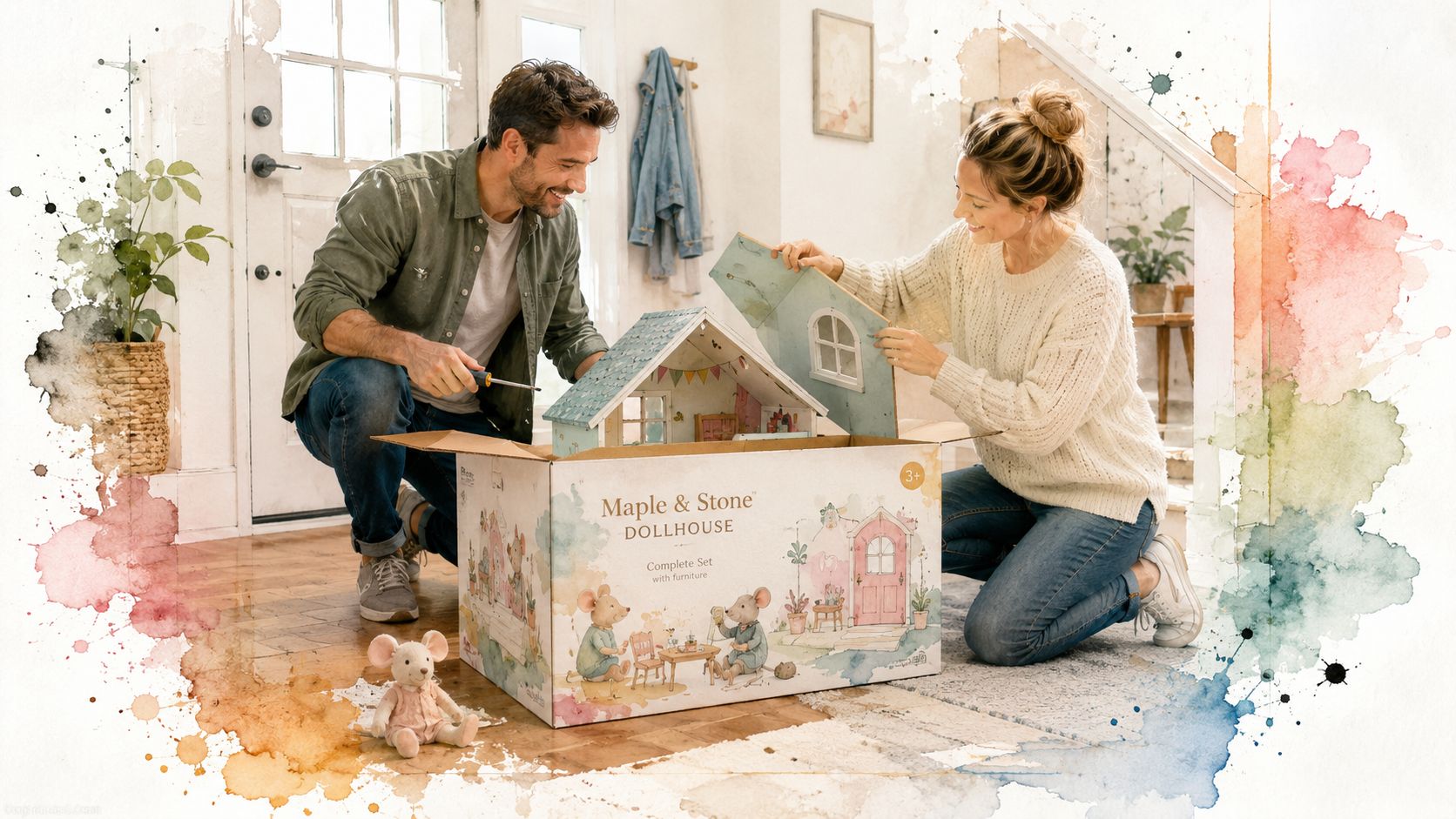
The cardboard flaps open, and the printed pastel illustration gives the children an immediate story to enter. They start assigning rooms before the panels are even out of the box. One mouse will sleep upstairs, another will need the attic, and someone has already claimed the kitchen.
Then the practical reality arrives. Maileg officially lists the house at 80 cm high, 72 cm wide, and 40 cm deep, or about 31.5 in by 28.35 in by 15.75 in in imperial measurements. It weighs 10 kg, or 22.05 lb, and requires assembly, so this isn't a piece you casually slide onto a nursery shelf. The dimensions and weight are listed on Maileg's House of Miniature product page.
Give the house a real home
I'd decide where it lives before buying a single lamp or bed. A playroom wall gives children access from different angles, while a living-room position makes the house part of the home's visual scene. Either way, leave enough room for small hands to reach into every floor and for adults to lift the roof or move the structure during cleaning.
The official design includes four spacious rooms plus an attic, with optional additions that can create a bonus room and an extra bathroom. That arrangement is what gives the house its architectural presence. It can begin as a simple home for a few figures, then grow into a miniature environment with distinct spaces and recurring stories. Maileg's dollhouse guide confirms the room layout and the available extensions.
Maileg has been building its design identity since 1999, when Dorthe and Erik Mailil established the company in Denmark. The brand name combines the family surname with the Danish word leg, meaning play, and the House of Miniature reflects that history through its coordinated figures, furniture, rooms, and accessories. You can read more about why Maileg toys become cherished family keepsakes.
The emotional payoff comes from the house's permanence. Children don't unpack it and move on. They return to it, rearrange it, negotiate who lives where, and build stories around tiny domestic details. That's why the setup deserves the same care you'd give any meaningful piece of children's furniture.
Planning the Right Space and Scale
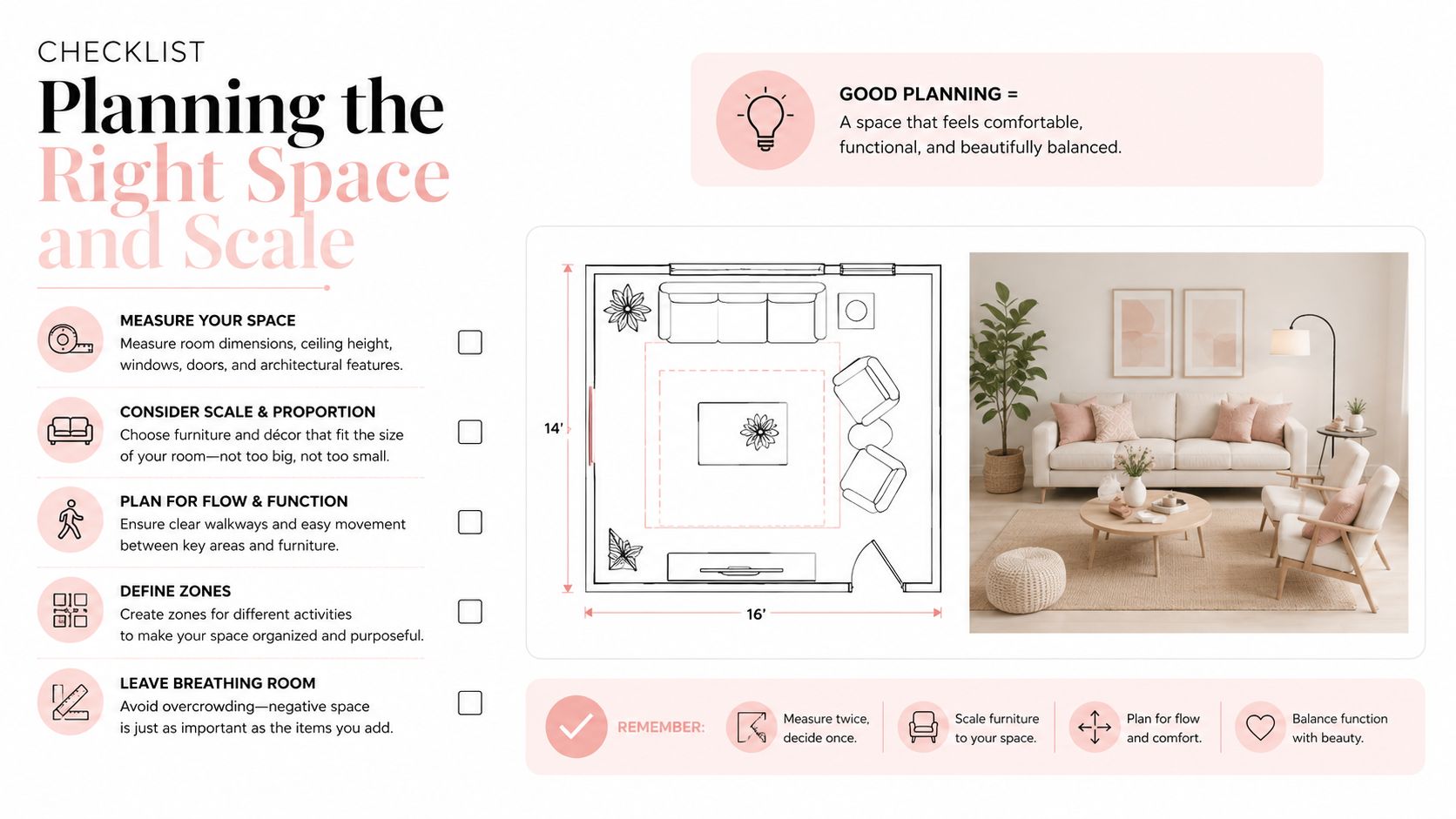
Before opening a panel, measure the footprint. The House of Miniature is substantial, and the correct location must support both display and play. A child's bedroom corner can work beautifully, but only if the house doesn't become trapped against two walls. A playroom wall may offer easier access, while a family-room position keeps the imaginative world visible and available throughout the day.
Leave clearance around the structure so children can reach in without leaning their bodies against it. I'd also allow at least 30 cm above the house for roof removal, especially if you plan to rotate furniture, retrieve a figure, or add wallpaper later. Confirm that the surface is level, stable, and strong enough for a structure weighing 10 kg, as listed in Maileg's official product information.
Make scale your first buying filter
The House of Miniature is designed around Maileg's own miniature system. The house accommodates Maileg mice, bunnies, and furniture accessories, so compatibility matters more than whether a piece is labeled “dollhouse furniture.” A chair that looks charming on its own can feel oversized or undersized beside the figures.
Use this pre-build checklist:
- Placement: Choose a position with play access and enough overhead clearance.
- Surface: Check that the floor or shelf is level and won't wobble under the assembled house.
- Lighting: If you plan to use string lights, identify a nearby power outlet without creating a trailing cord in a child's play path.
- Storage: Reserve divided storage for loose beds, lamps, textiles, and small figures.
- Scale: Confirm that every furniture item belongs to the Maileg-compatible miniature system before purchasing.
The critical distinction is between a house that merely resembles a dollhouse and one that supports the proportions of the figures you already own. The Maileg House of Miniature is marketed for specific figure families and furniture sizes, including Bunny and Rabbit size 1, size 2, micro, my, and Teddy family figures, as outlined by this Maileg House of Miniature buying resource.
For broader room planning, consider the elements of an ideal play area, particularly clear access, sensible storage, and a setup that supports independent play without turning the room into a cluttered obstacle course. For figure selection, use the Maileg mouse guide by size before buying a family group.
Practical rule: If an accessory isn't made for the same miniature system, assume it will look wrong until you've checked its proportions beside the figure and doorway.
Unboxing and Assembling Your Maileg Dollhouse
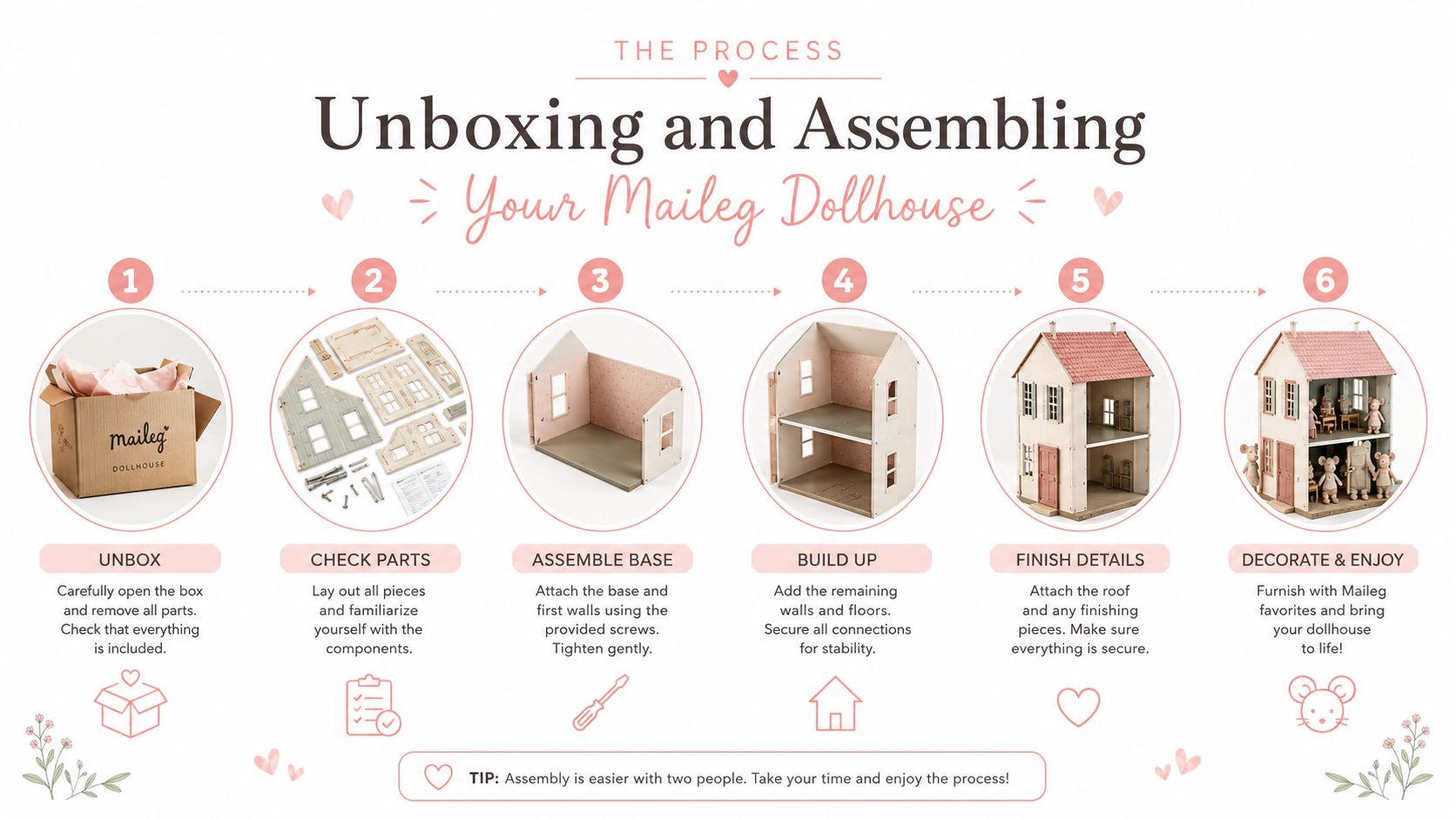
Assembly goes more smoothly when you treat it as a build phase, not a quick Saturday chore. Clear a large floor area, place a soft blanket underneath the panels, and keep children nearby but away from the hardware until the structure is stable. The official listing confirms that the house requires assembly, so give yourself enough time to work methodically rather than rushing the final joins.
Prepare before fastening anything
Start by laying every panel flat and grouping parts by function. Keep the base, wall panels, roof components, and hardware in separate areas. A small level, rubber mallet, blue painter's tape, and a dedicated Phillips screwdriver are more useful than improvised tools. The tape helps hold temporary joins while you check alignment, and the mallet lets you seat a joint without striking the wood directly.
Experienced miniature builders commonly recommend dry-fitting components before committing to final assembly, and guidance on building materials for scale models highlights dry-fit checks, suitable structural materials, and the need to account for first-time build time. The principle is simple: make sure the pieces work together before you force them into position.
Follow the structure, not your impatience
Dry-fit the base first. Add the walls one at a time, checking that each panel sits flush before partially securing the joinery. Tighten gradually rather than locking one corner completely while the opposite side remains loose. This approach gives the structure room to settle into alignment.
Install the roof last. Check the roof pitch, wall contact, and any door openings before tightening the final hardware. Once the main shell is secure, test every door and opening again. A door that scrapes usually signals a wall or floor alignment issue, not a problem you should solve by forcing the door.
Avoid four common mistakes:
- Forcing a warped panel: Stop and reassess the fit instead of using hardware to pull it aggressively into place.
- Overtightening screws: Excessive pressure can damage MDF or distort the join.
- Skipping dry-fit assembly: Small alignment errors can multiply as additional walls and roof panels are added.
- Ignoring floor level: A slightly uneven base can leave the finished house unstable and make doors drag.
Build standard: Don't bring in furniture until every wall is flush, every door swings freely, and the completed structure has no wobble.
If you're deciding what to buy alongside the house, keep the complete Maileg House of Miniature buying guide open while you plan. The best first purchase is a stable shell with a clear furnishing strategy, not a random pile of charming miniature pieces.
Room by Room Styling With Maileg Furniture
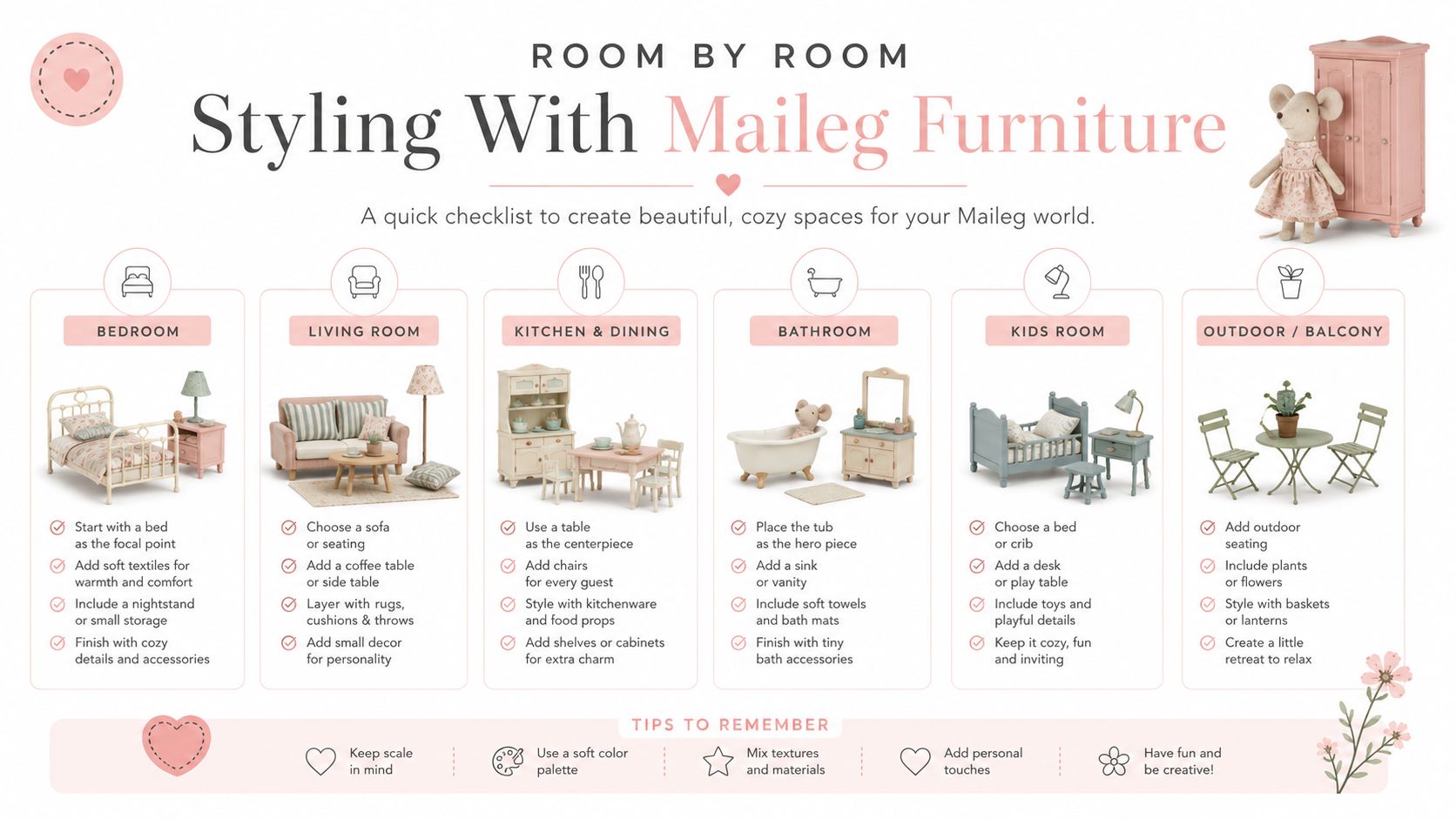
Styling works best when you finish one room before scattering furniture through the entire house. A completed room gives children a clear story to play, while an unfinished collection of disconnected pieces makes the house feel like storage. Start with the rooms where the figures will spend the most time, then build upward.
Ground-floor living and kitchen spaces
The lower level usually offers the easiest access and the most forgiving headroom. Begin with a small sofa, dining table, and kitchen hutch from the compatible Maileg furniture collection. Arrange the largest pieces first, then add a single textile or accessory that gives the room a reason to exist.
A kitchen can become the social center of the house. Place the table where figures can sit visibly, leave enough floor area for movement, and avoid filling every corner. Children need to remove figures and furniture without dismantling the entire scene.
Bedrooms and bathroom spaces
Move upstairs only after the ground floor feels balanced. The pitched roof changes the usable height, so low-profile beds, dressers, and bathtubs are safer choices for the upper rooms. Place each item under the roofline before buying multiples. A bed can fit across the floor but still fail once a figure needs to stand beside it.
Check figures against doorways and windows, too. Taller Maileg figures, including larger family members, may need the extra clearance provided by an expanded room. The Maileg furniture guide for creating a little one's world can help you organize purchases by room and figure compatibility.
Use three filters for every room:
- Wall height: Can the figure stand without touching the ceiling?
- Floor area: Can the furniture be removed by a child's hand?
- Ceiling pitch: Does the roof slope restrict the item or the story?
Style with restraint
A miniature room needs negative space. Keep one visual anchor, such as a bed, sofa, or table, then add smaller details around it. For a whimsical sleeping space, a fairy bedroom guide by Quote My Wall offers useful inspiration for color, pattern, and atmosphere without requiring you to copy a full-size room.
My preferred order is practical: furniture first, textiles second, tiny accessories last. Let one room become the family kitchen, another the bedroom, and the attic a flexible retreat. That sequence creates a house children can understand and continue changing.
Choosing Add-On Rooms and Accessories
The official bonus room and extra bathroom are useful, but they solve different problems. The bonus room expands the house's storytelling capacity and creates more flexibility for taller figures or a dedicated bedroom. The extra bathroom adds detail, but it may duplicate a room your child rarely styles.
I'd prioritize the bonus room for families building a broader figure collection or planning to use larger Bunny and Rabbit figures. I'd treat the second bathroom as optional, especially if your child prefers family scenes, cooking, bedtime routines, or open-ended room rearranging.
| Add-On Option | Approximate Cost | Best For | Skip If... |
|---|---|---|---|
| Bonus room | Check current listing | Taller figures, extra bedroom space, multi-room storytelling | You have limited wall or shelf footprint |
| Extra bathroom | Check current listing | Children who enjoy detailed domestic scenes | Your child rarely uses the first bathroom |
| Loose furniture | Buy gradually | Families building one room at a time | You haven't confirmed scale or floor space |
| Seasonal accessories | Varies by current listing | Refreshing existing rooms without rebuilding | Small loose parts are difficult to store |
The table intentionally leaves pricing to the current listing. No verified price is provided here, and you shouldn't rely on an old guide for a purchase decision. Review the current Maileg toys online collection before committing to an add-on.
A vintage-style loft treatment can also make attic space feel finished without immediately expanding the structure. Seasonal textiles, small bedding changes, and a rotating accessory tray can create a fresh story from the same furniture. Buy the bonus room when you need more usable architecture. Buy accessories when the existing rooms need narrative, not clutter.
Safety, Age Fit, and Play Habits
The printed 3+ recommendation is a starting point, not a complete play plan. Maileg explains that its toys are tested to EN-71 and ASTM-F963 standards, while some products receive a 3+ recommendation because of small parts and children's fine motor skills, as described in Maileg's age guide.
The House of Miniature includes small removable figures, furniture, and accessories. Those parts need to stay away from unsupervised toddler play, particularly when a child still mouths objects or cannot reliably follow a small-parts rule. U.S. guidance from the Consumer Product Safety Commission's toy-safety information also addresses puncture hazards for toys intended for younger children and CPSC requirements for products intended for children 12 and under.
Build supervision into the setup
For preschoolers, I'd begin with adult-led play and a limited number of loose pieces. Give children a clear routine for returning figures and furniture to a tray when play ends. A soft rug underneath can cushion dropped pieces, while divided storage reduces the chance that tiny accessories disappear into bedding, vents, or floor gaps.
Anchor the house according to the installation conditions in your home, especially if children climb nearby or pull on furniture. Inspect the structure after energetic play, and keep it out of a toddler free-play zone unless an adult is actively supervising.
House rule: “Mice stay upstairs, hands stay clean.” A simple boundary protects the toys and keeps the story playful rather than restrictive.
This is a strong fit for supervised preschool play and for older children who can manage small parts thoughtfully. It also suits adult display and collecting. It isn't a baby toy, and treating it that way creates unnecessary risk.
Care, Maintenance, and Long-Term Joy
The House of Miniature earns its place through continued use, not a perfect opening-day photograph. Dust the structure with a soft makeup brush and microfiber cloth, especially around fabric furniture and small accessories where lint gathers. For wooden surfaces, use a barely damp cloth and keep harsh sprays away from paper, cardboard, and printed details.
A little maintenance keeps the house inviting:
- Refresh gently: Clean one room at a time rather than clearing the entire house.
- Store by category: Use labeled divided trays for mice, beds, lamps, textiles, and loose props.
- Inspect regularly: Check joints and shelf pegs periodically, tightening or repositioning anything loosened by enthusiastic play.
- Rotate the story: Change displayed rooms seasonally so children notice familiar pieces in a new setting.
- Photograph layouts: Keep a simple visual record so you can restore a favorite arrangement after inevitable reorganizing.
The most convincing argument for buying this house is its ability to change with the family. At first, a child may need help deciding where each figure belongs. Later, they can furnish a room independently, invent household routines, and rebuild the layout around new characters. Parents often become part of the ritual too, helping with wallpaper, arranging beds, and preserving the tiny details that make the house feel personal.
Maileg was established in Denmark in 1999, and the House of Miniature sits within a design history that has expanded from collectible characters into furniture, accessories, and room extensions. That context helps explain why the house feels like more than a single-use toy. With careful placement, compatible purchases, and regular storage, it can move from plaything to display piece and remain meaningful across siblings or future family memories.
If your home has the space and your child enjoys small-world storytelling, I'd buy the house first, plan the room layout, and add furniture deliberately. Start with the bonus room only when scale or story requires it. The right setup will feel calm, usable, and ready for the first mouse to move in.
NINI and LOLI offers Maileg dollhouses, rooms, furniture, and miniature accessories for families creating a coordinated House of Miniature setup. Visit NINI and LOLI to choose the structure and compatible pieces that will give your child's tiny home a thoughtful place to begin.