


You're standing in front of two Maileg homes, or maybe you're staring at a screen late at night, trying to decide which one will get played with instead of just admired. That's the core question behind Best Maileg Dollhouses: Houses and Castles Compared, and it's the one most product pages don't answer clearly enough. If you want the short version, the right choice depends less on looks and more on the play pattern, room size, and the figures you already have or plan to buy. Start with the house overview of Maileg House of Miniature rooms if you're drawn to multi-room storytelling, because that's usually where the decision becomes obvious.
| Feature | Maileg House | Maileg Castle |
|---|---|---|
| Shape | Open-front dollhouse | Tower-style, vertical scene |
| Room feel | Multi-room domestic play | Compact fantasy play |
| Footprint | Larger, furniture-like presence | Smaller floor footprint, taller profile |
| Figure fit | Built for miniature furniture and broader Maileg friends | Built for mouse-sized and My-sized furniture |
| Display style | Reads like a statement home | Reads like a decorative scene |
Standing in Front of Two Beautiful Maileg Homes
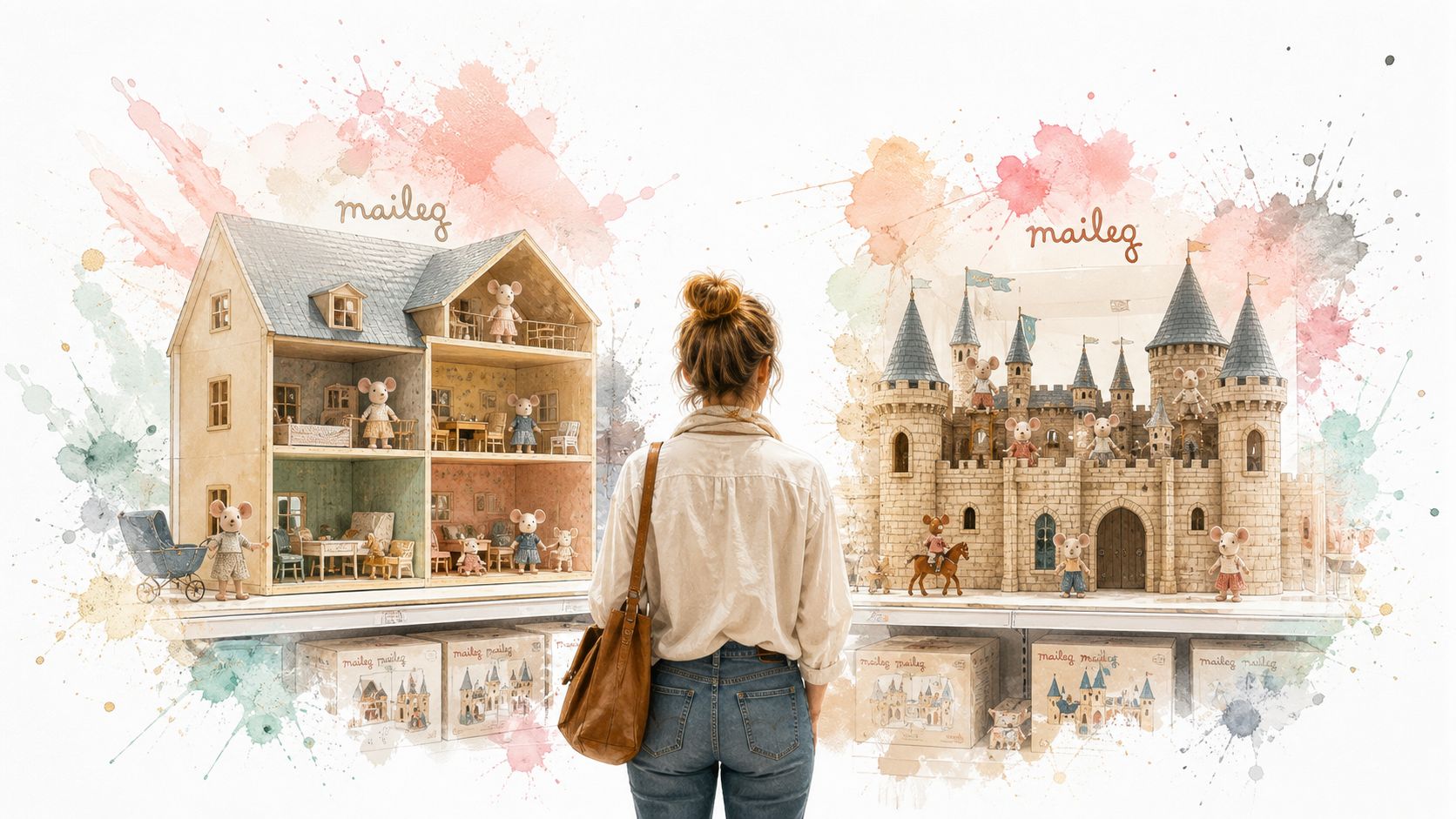
This is the moment: one parent wants the house because it feels expansive and practical, the other is drawn to the castle because it looks magical and compact, and both are right in their own way. Maileg makes that choice harder because the brand's homes all have the same charming language, so the difference gets buried under the pretty paintwork.
The fastest way to sort it out is to stop asking which one is cuter and ask which one matches the child's play style. If you want a room-filling setup with furniture, figures, and scenes that change room by room, the house wins on function. If you want a tighter display piece that still sparks stories, the castle makes more sense.
Practical rule: buy the format that fits your floor space first, then layer in character and furniture. If the home won't sit comfortably where you plan to use it, it'll end up feeling like a storage problem instead of a gift.
That's why a side-by-side comparison matters. The difference isn't subtle once you look at size, room structure, and how much open-ended play each format supports. For a deeper beginner-friendly overview of the brand's broader world, the complete Maileg buying guide is a helpful companion, but the decision here comes down to how the home will live in your house.
What Maileg Dollhouses and Castles Actually Are
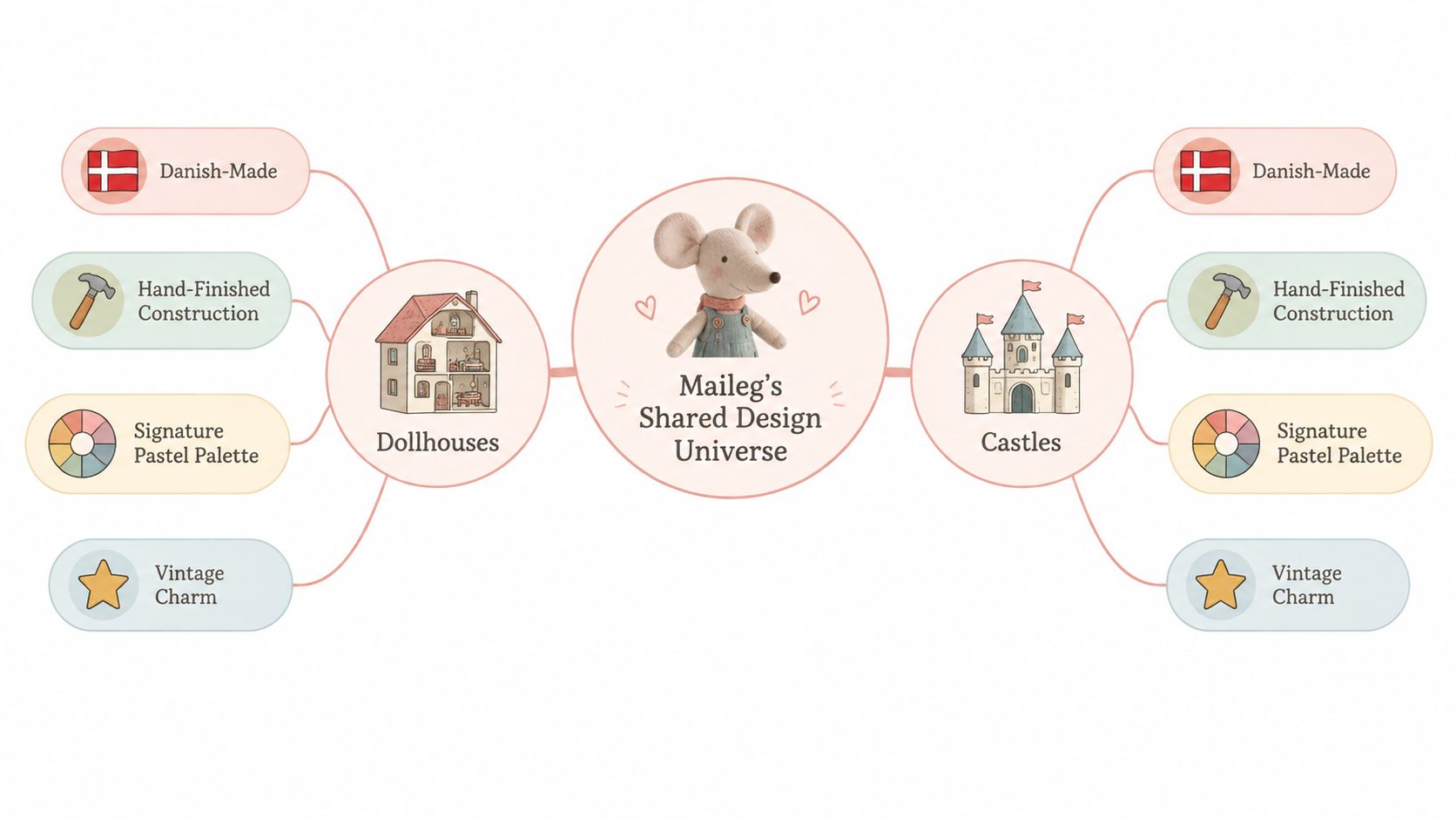
Maileg's homes share one design universe, but they do different jobs in play. The House of Miniature is the flagship dollhouse line, a wooden dollhouse with 4 spacious rooms and an attic, measuring 80 cm high, 72 cm wide, and 40 cm deep, with a net weight of 10 kg (Maileg product page). The current U.S. listing gives the same home as 31.50 inches high, 28.35 inches wide, and 15.75 inches deep, and marks it +3 years (Maileg USA).
The house, the farmhouse, and the castle are not the same thing
Maileg's size guide separates the line by play system, not just by style. The House of Miniature is built for miniature furniture and fits Bunny/Rabbit size 1 and 2, micro, my, Teddy family, and miniature furniture (Maileg product page). The Mousehole Farmhouse and Castle are built for mouse-sized and My-sized furniture, and the castle uses FSC paper construction in a compact 62 x 24 cm format (Maileg size guide).
That split matters because it changes the kind of play each home supports. The house gives you more room for furniture, separate scenes, and slower story-building across rooms. The castle is tighter, lighter, and easier to place on a shelf or smaller surface, so it suits compact setups better.
Maileg's history matters too. The brand began in 1999 with Dorthe Mailil and Erik Mailil, and current listings show the House of Miniature as a 2023 launch that is still being sold with the same core specifications in 2025–2026 (Little Wren's Nest retailer listing). That tells you the House of Miniature is a stable, long-supported product line rather than a limited seasonal release.
For a broader orientation, the complete Maileg buying guide helps place this home in the brand's wider range. For the visual mood Maileg is drawing from, paintings of castles for home decor show the same tall, story-heavy appeal, only without the play features.
Side by Side, House Versus Castle
A child who wants a room for everything usually ends up happier with the house. A child who wants a compact scene that looks good on a shelf usually ends up happier with the castle. That is the choice here.
| Maileg House vs Castle Feature Comparison | Maileg House | Maileg Castle |
|---|---|---|
| Shape | Open-front, multi-room home | Tower-style, vertically stacked scene |
| Core construction | Wood | FSC paper construction |
| Current size | 80 x 72 x 40 cm, about 10 kg (Maileg size PDF) | 62 x 24 cm compact format |
| Age fit | +3 years (Maileg USA) | Best suited to older preschoolers and children who enjoy vertical play |
| Figure compatibility | Bunnies, rabbits, micro, my, Teddy family, miniature furniture | Mouse-sized and My-sized furniture |
| Best use | Multi-room, furniture-rich play | Compact story scene, wall-side display |
| Footprint | Larger floor and shelf presence | Smaller footprint, easier to tuck into a corner |
The house is the one I'd pick for children who want separate rooms and a slower, more layered kind of play. Kitchen, bedroom, living space, attic, all of it gives them room to stage scenes and shift the story without feeling boxed in. The castle works differently. It is tighter, taller, and more theatrical, which is why it suits smaller setups and kids who like movement more than floor plan.
The trade-off is simple
If you care most about room count and furniture compatibility, choose the house. If you care most about keeping the setup compact and displayable, choose the castle. Room count and furniture compatibility matter more than surface-level charm when choosing between the two.
The house also handles bigger pieces better. That fits the broader Maileg sizing system, and the Maileg furniture guide and home fit notes are worth reading before you buy extra furniture, because the wrong mix is what causes frustration later. Smaller figures and smaller furniture still have their place, but the house gives them more breathing room.
The castle's strength is its vertical silhouette. It feels like a scene built upward, so it works well for children who like placing figures on balconies, stairs, and upper levels. The house feels more immersive. The castle feels more staged.
Buying instinct to trust: if your child likes arranging rooms, the house fits that instinct. If they like setting up one dramatic scene and returning to it, the castle suits them better.
For visual context, paintings of castles for home decor capture the same tall, story-heavy mood, just without the play features.
How Each Format Changes Everyday Play
The difference shows up after the ribbon comes off. A house changes play by giving each room a different job. Children can move a figure from one space to another, or split play between siblings by assigning a room to each person. That setup stretches the story without needing a new toy every time.
Room-by-room play versus scene-based play
The house encourages domestic storytelling. One room becomes a kitchen, another becomes a bedroom, and the attic can turn into storage, a hideaway, or whatever the child decides. That flexibility is why the House of Miniature usually keeps attention longer in homes where children like switching roles and reworking the same story.
The castle pushes play upward. Kids who enjoy lifting figures between levels, placing them on balconies, or making a tiny scene feel grand usually respond to that tower shape right away. The play feels more theatrical and a little more dramatic, which suits children who like movement and vertical exploration.
A child who likes sorting and staging will usually prefer the house. A child who likes climbing, peeking, and nesting scenes will usually lean toward the castle.
| Play Pattern Comparison: Maileg House vs Castle | Maileg House | Maileg Castle |
|---|---|---|
| Story style | Domestic, room-based, open-ended | Fantasy, vertical, theatrical |
| Best for | Sibling role-play, multiple scenes | Solo scene staging, tower play |
| Figure movement | Easy to move through open rooms | More up-and-down movement between levels |
| Display when not in use | Looks like miniature furniture in the room | Looks like a decorative set piece |
| Space needs | Works best with a clear surface | Works best on a lower shelf or dedicated display spot |
Parents also run into sizing surprises here. The house is built for miniature furniture and bigger Maileg friends, while the castle is built around the mouse and My system, as noted earlier. If you own rabbit or Teddy pieces, the house keeps them in play instead of leaving them on the sidelines. If your family is deep into mice and mouse furniture, the castle feels complete without needing a huge footprint.
For anyone building a miniature world over time, a Maileg mice furniture guide helps avoid those awkward “it almost fits” purchases.
Choosing the Right Maileg Home as a Gift
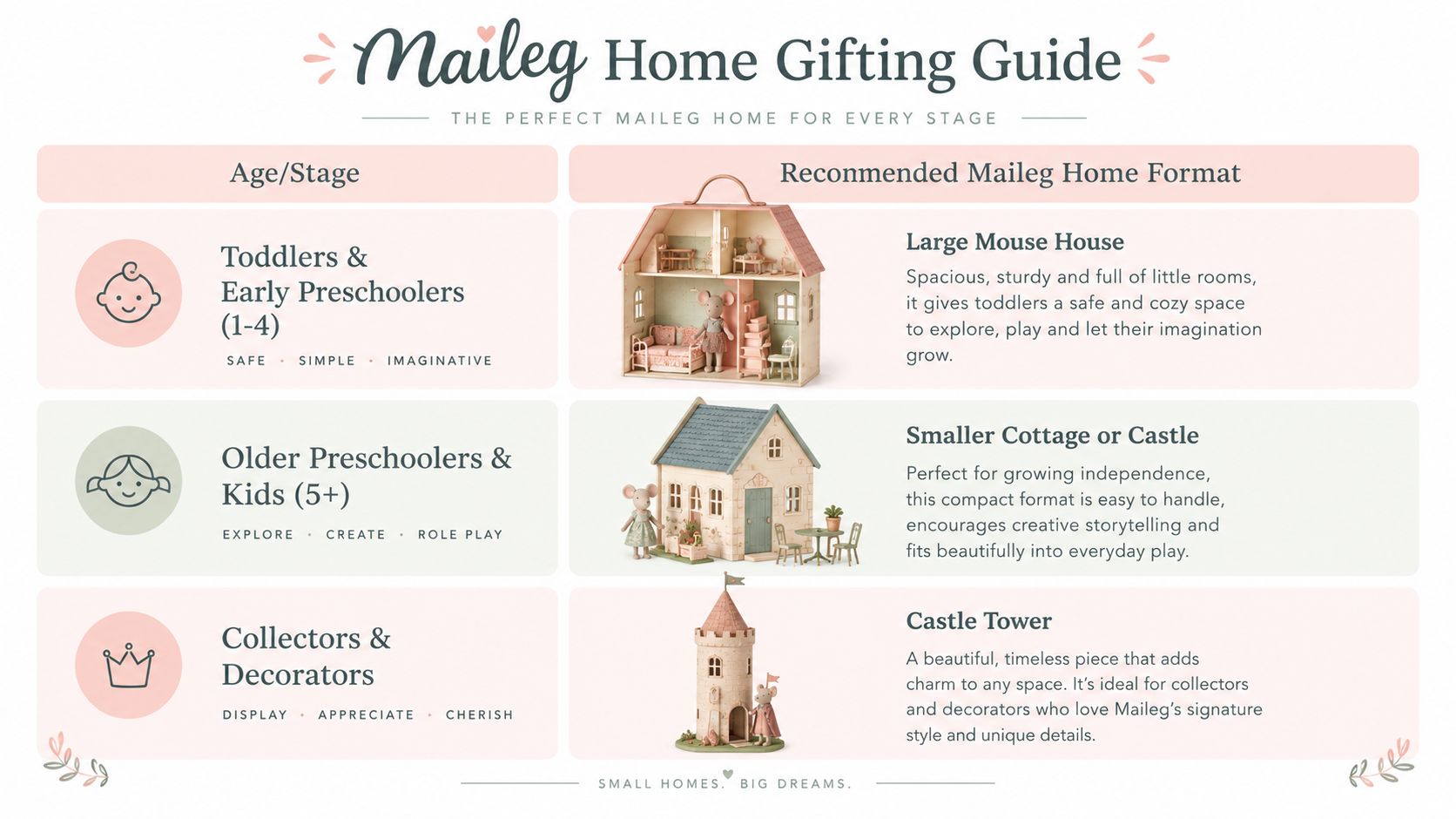
Gift shopping gets easier once you stop thinking in broad terms and start matching the home to the child's actual stage. The house makes sense for children who want a bigger world to arrange. The castle makes sense when you want a gift that feels special, compact, and easy to place in a room without taking over every surface.
Match the age to the play style
The House of Miniature is listed +3 years on the official U.S. store (Maileg USA), so it fits the stage where children are ready for supervised, more careful play. The castle suits children who already enjoy lifting pieces between levels and adjusting scenes with a bit more intent. That usually starts to feel natural a little later, when they're more interested in story-building than in just pushing figures around.
Occasion matters too. A bigger house works beautifully for a birthday or Christmas morning when you want the gift to feel like the centerpiece of the room. A castle can be a lovely gift for a christening, a grandparent present, or any occasion where display value matters as much as play.
If you're choosing add-ons, keep it simple and complete the world on day one. One furniture set, two or three figures, and a pram go a long way toward making the gift feel ready rather than half-finished. The biggest mistake is gifting the shell and hoping the rest sorts itself out later.
Gift checklist that actually helps
- Choose the right format first: If the child likes rooms and furniture, buy the house. If they love compact scenes, choose the castle.
- Check figure fit before checkout: Rabbit, Teddy, mouse, and miniature pieces do not all belong in the same home.
- Add one complete scene starter: A matching furniture set makes the gift feel intentional.
- Keep the wrapper neat: Presentation matters with collectible-style play pieces.
- Buy from a store that can advise on fit: NINI and LOLI can help with bundling and gift wrap, which is useful when you want the present to arrive finished instead of pieced together.
For visual gifts that complement a miniature room or nursery corner, you can also shop wall art online and pair the home with a decorative backdrop that suits the room.
Assembly, Placement, and Long Term Care
Most Maileg homes need less setup than people expect. They arrive mostly built, so you are usually finishing the structure rather than assembling it from scratch. For the House of Miniature, see how the perfect dollhouse comes together if you want a clear sense of the process before you buy. The build is still straightforward, and the retailer listing describes it as flat packed with an assembled size of 80 cm x 40 cm x 72 cm.
What the setup actually involves
In practice, you are attaching the last pieces, not constructing a full house. That may mean chimneys, roof sections, or a tower top, depending on the format. With the included hardware and a calm setup, most families can finish without special tools.
Placement matters more than assembly. These homes are sturdy, but they are still collectible play pieces, not climbing structures. Put them where children can reach them without standing on chairs, and keep the upper sections for play, not storage.
Keep the home at child height and away from direct sun and radiators. That protects the finish and makes daily play easier.
Long-term care stays simple if you stay consistent. Use a soft dry brush for weekly dusting, then a barely damp microfiber cloth for marks. Skip sprays that soak the wood. Sunlight can fade painted finishes, radiators can dry out joints, and humidity can affect the wooden floors.
If you are storing a house for later use or another child, keep the original box flat and tuck silica sachets inside. Wrap figures separately so the paint does not transfer. If you need servicing or replacement guidance, NINI and LOLI can help you work out the next step.
Your Quick Maileg Dollhouse Buying Checklist
Use this checklist and buy with confidence.
- Check the age fit first. The official House of Miniature is listed +3 years. Small accessories still need supervision.
- Measure your floor space before you commit. The house is 80 x 72 x 40 cm and about 10 kg, so it needs a real spot in the room.
- Match the format to the play pattern you want. Choose the house for multi-room play and bigger storytelling. Choose the castle for a tighter, more display-friendly scene.
- Start with furniture that fits the scale. A matching furniture set and a couple of figures make the gift feel complete from day one.
- Buy from an authorized stockist. That gives you authenticity, current packaging, and better access to care guidance or replacement support.
- Keep the box. It helps with storage and resale.
Whichever format you pick, put furniture scale first. A mismatched figure or chair is the quickest way to turn a lovely Maileg home into a shelf piece instead of a played-with one.