


You've found the character-themed stroller accessory that would make your nursery feel complete. The colors are perfect, the design is charming, and it looks ready for your registry. Then it arrives, and the fasteners don't line up with your stroller, the fabric sits too close to the harness, or the crib attachment doesn't secure properly. A cute purchase can become an expensive return when characters and compatibility aren't evaluated together.
Before you add another themed accessory, check how it connects to the gear you already own, how it affects everyday use, and whether the manufacturer approves that combination. You can also browse NINI and LOLI's curated baby collections to build a character-friendly registry around practical pieces that suit your nursery, travel routine, and gifting needs.
Why Characters and Compatibility Matter for Baby Gear
You choose a stroller for apartment living, then add a character-themed liner, toy bar, or canopy to make it feel personal. The accessory arrives, but its fasteners miss the attachment points, the seat shape differs, or the harness layout leaves no safe room. Online photos hide those details. A cute design can become an expensive return before your first trip from the house to the car.
Visual appeal should never be the first and only filter. Character details make baby gear joyful, memorable, and easy to gift. Compatibility decides whether that item works in your home, car, and daily routine. A stroller accessory should match the intended stroller. A car-seat accessory should preserve the harness and buckle's designed operation. A crib item should attach only as its instructions allow.
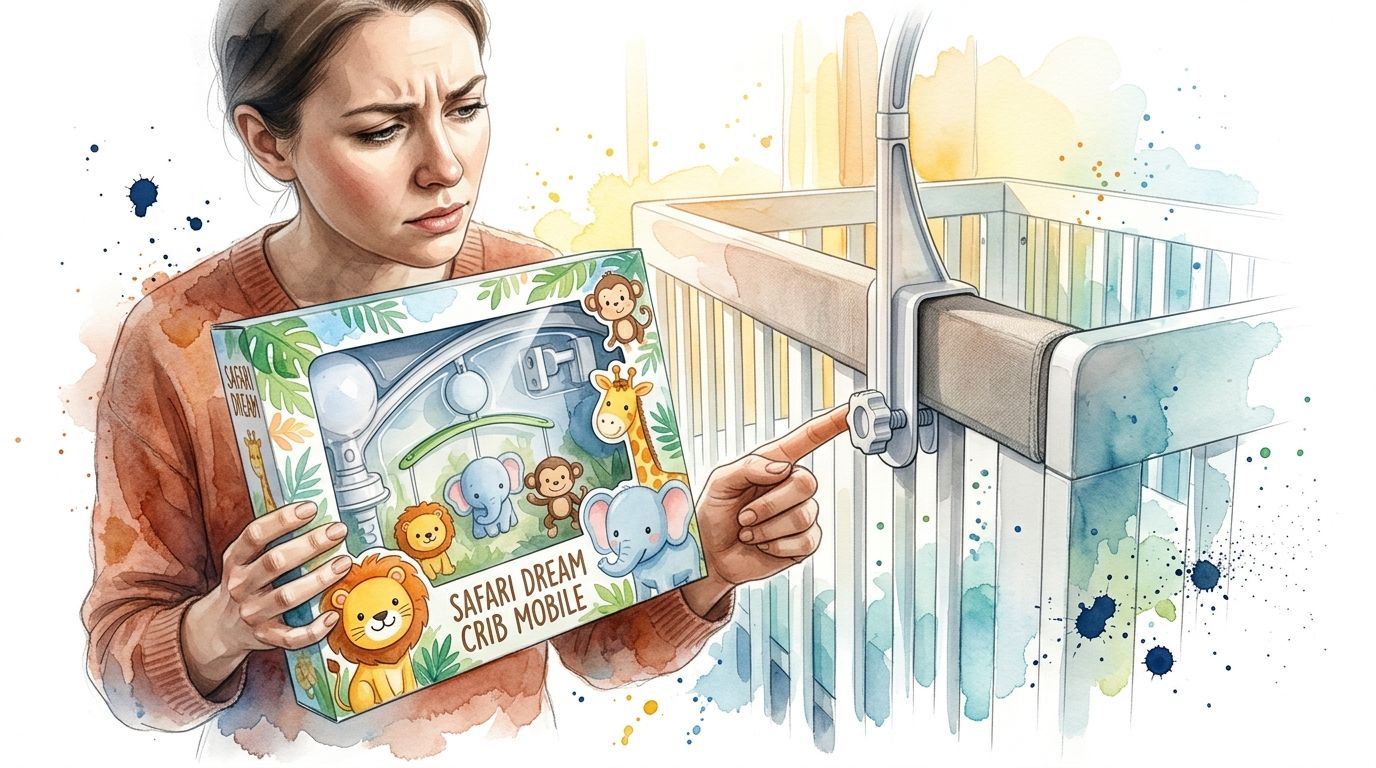
The hidden cost of a charming mismatch
A poor fit brings more than frustration. It can turn into a return, a replacement purchase, or a registry gift that stays unused. With travel gear, an accessory that interferes with buckles, straps, or approved connection points can create a safety concern.
Compatibility is a system issue, not a decoration detail. In the United States, LATCH was introduced in 1999 and became required in every car and light truck sold from 2002, establishing a standardized way to connect child restraints to vehicles through the documented history of FMVSS 213 and LATCH. European standards also moved toward more structured fit. UN R129, known as i-Size, became effective from 9 July 2013, using height-based selection and side-impact testing within a stricter compatibility framework.
Practical rule: Choose the character first only after the product's fit, attachment method, and approved use are clear.
For a stroller and infant-seat setup, check the manufacturer's compatibility information before buying a themed add-on. This guide to infant car-seat and stroller compatibility helps you assess the complete travel system instead of judging one attractive accessory in isolation. The right character piece should personalize your routine without forcing you to rebuild the system around it.
What Characters and Compatibility Mean for Your Gear
You find the perfect character blanket, then discover it blocks the stroller harness or does not fit the car-seat attachment. That mismatch is where cute design becomes an expensive return, an unused registry gift, or an unsafe setup.
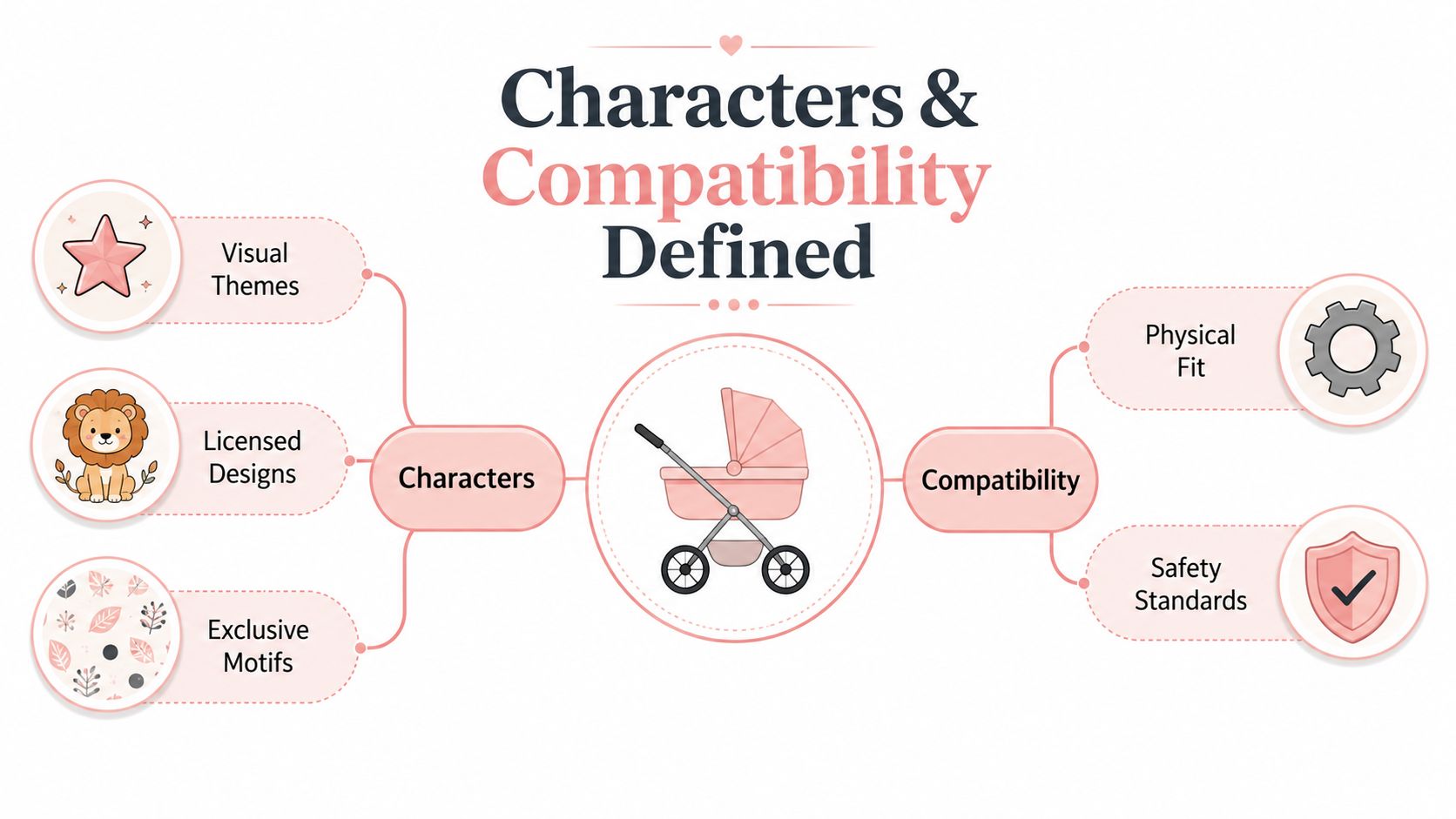
Characters are the visual language of baby gear. They include animal themes, storybook-inspired artwork, licensed designs, color palettes, embroidered motifs, and exclusive patterns made for a collection. The same character may appear on a plush toy, blanket, pajama set, stroller accessory, or nursery accent.
Compatibility describes how that item works with the gear around it. Check whether it connects securely, fits the intended dimensions, clears moving parts, and follows the product's instructions and safety requirements. A design can look perfect while the item itself is wrong for your stroller, car seat, crib, high chair, or sleep space.
Your registry works like a set of puzzle pieces. The character is the picture on one piece. Compatibility is the shape that lets it sit correctly beside the others. If the shape is wrong, the piece may look appealing alone but will not complete the setup.
Use the two-part buying test
Ask these questions before purchasing:
- Does the design belong in our family's world? Consider your child's interests, nursery colors, and whether the item suits a newborn, infant, toddler, or older child.
- Does the product belong with our gear? Confirm the exact stroller, car seat, crib, high chair, or sleep space it is designed to work with.
The first question protects your style and emotional connection to the purchase. The second protects your time, money, and daily routine. Add the item to your registry only when both answers are clear.
Compatibility charts can help, especially when a modular stroller accepts infant car seats from several brands. That flexibility does not replace checking the exact model, connector, and attachment method, as shown in this overview of stroller and car-seat compatibility.
Separate decorative use from functional use
A character blanket used for supervised cuddling has different requirements from a liner placed beneath a stroller harness. A plush toy displayed on a nursery shelf has a different role from an accessory attached to a crib or feeding seat.
“Cute” describes the design. “Compatible” describes whether the product can perform its intended job with your gear.
For a travel system, review this travel-system buying guide with the stroller, infant seat, base, and attachment points in mind. Choose the character details after the system is confirmed, not before.
Age-Appropriate Character Designs by Stage
Character preferences change quickly during the early years, so buying every charming design at once can leave you with items your child outgrows before they become part of the routine. A better approach is to match the character's visual complexity, texture, and use to the child's stage.
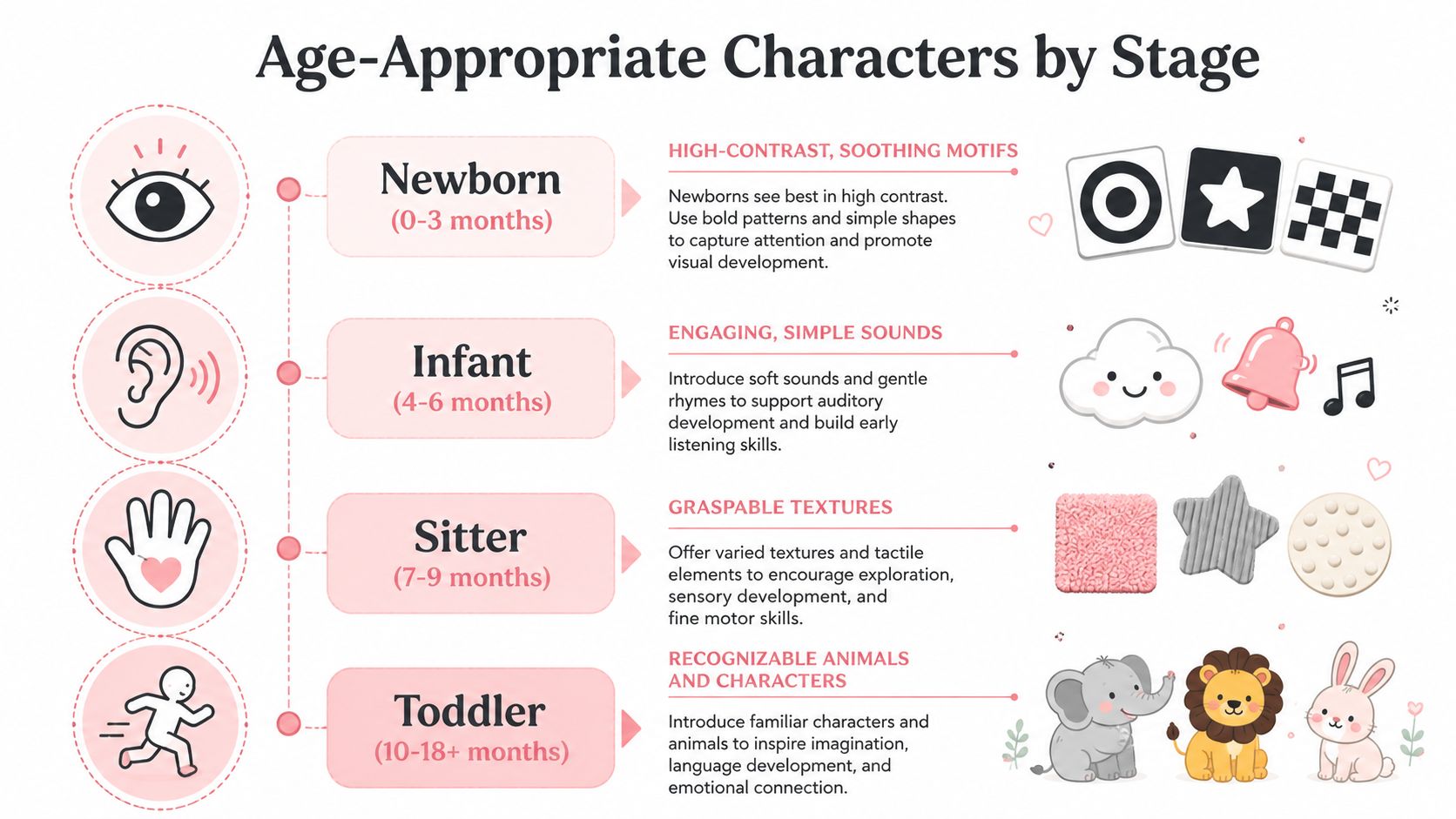
For a newborn, choose a calm design that works with the nursery rather than a highly specific theme your child may reject later. High-contrast artwork, simple shapes, and gentle palettes can photograph beautifully in a nursery without requiring you to commit to a busy character environment. If you're planning newborn portraits, a newborn portrait guide for photographers can also help you think about how blankets, clothing, and simple props appear together.
Newborn and early infant choices
For the earliest stage, prioritize character items that serve a clear everyday role:
- Nursery bedding accents: Choose coordinated colors and simple motifs that can remain useful as the room evolves.
- Soft clothing: Favor designs that are easy to put on and remove, rather than selecting an outfit only because the character is recognizable.
- Supervised plush play: Pick a soft character friend for awake, supervised interaction, and follow the product's intended-use guidance.
An infant may respond to a bold or familiar visual later, but newborn shopping works best when the item feels soothing to the adults and easy to use during frequent changes. The character should add warmth without making the product harder to wash, store, or coordinate.
Sitter and toddler preferences
As children become more active, tactile details and recognizable animals often become more engaging. A character plush with a distinct shape, a textured toy, or a simple animal motif can become part of floor play, stroller outings, and story routines. Look for designs that remain appealing when the child moves from nursery use to living-room play.
Toddler apparel and pajamas offer more room for personality. At this stage, a favorite animal or story friend may make getting dressed feel familiar, but sizing still matters. Buy for the child's current measurements and intended season, not only for the character you hope they'll love.
For a gift, choose one memorable character item and pair it with a practical piece in a compatible size. A plush friend alongside a wearable set can feel special without filling the registry with duplicates. Parents looking for a newborn-focused gift can use this guide to newborn-friendly character toys as a starting point.
Licensed Characters Versus N&L Exclusive Designs
The choice between a familiar licensed character and an N&L exclusive design usually comes down to the child's recognition, the parent's style, and how long the item needs to work in the home. Neither path solves compatibility by itself. Both still require a fit check before purchase.
A licensed design can create instant recognition. Older toddlers may respond to a familiar animal, story world, or character they already notice in books and play. An exclusive design often gives parents more control over the nursery palette, especially when they want a distinctive motif that works across bedding, toys, apparel, and gift wrapping.
| Consideration | Licensed Characters | N&L Exclusive Designs |
|---|---|---|
| Visual appeal | Familiar characters can create an immediate emotional response. | Exclusive motifs can feel more personal and less tied to one story world. |
| Nursery coordination | Strong character colors may shape the room's palette. | Curated colors and patterns may blend easily with an existing nursery. |
| Longevity | Recognition can remain meaningful when the child keeps returning to the same story or animal. | A timeless motif may continue working as the room and wardrobe change. |
| Registry appeal | Guests may quickly understand the theme the parents selected. | A distinctive design can make the gift feel considered and individual. |
| Buying decision | Choose when the child already shows a clear attachment to the character. | Choose when the parent wants a cohesive look with room to grow. |
Choose for the child, then edit for the home
If your toddler already reaches for one recurring character in books or play, a licensed item may have a clear emotional purpose. If you're furnishing a nursery before you know your child's preferences, an exclusive animal, pattern, or soft color story may be easier to live with across several stages.
Material quality, wash instructions, construction, and intended use still deserve more attention than the label on the design. A character doesn't make an item suitable for every environment, and an exclusive motif doesn't guarantee that it fits every piece of gear.
For parents weighing design identity alongside toy selection, this character and toy style guide offers another way to think about familiar storytelling versus a more curated collection. Keep the decision simple: choose the design that earns repeated use, then confirm that the product works with your household setup.
How to Check Compatibility with Strollers and Car Seats
You are leaving the hospital, the baby is crying, and the cute character cover will not sit correctly on the car seat. That mismatch is easier to prevent than to fix. Check compatibility before checkout, using the exact stroller or car-seat model, the accessory's attachment method, and the areas it may cover. A universal-looking design can still interfere with a specific harness, buckle, fold, or release.
Compatibility is a foundational safety and regulatory issue. Connectors such as LATCH and height-based i-Size systems follow defined installation requirements, so decorative gear must never be judged by appearance alone. Confirm the manufacturer's instructions and approved accessory list before you buy.
Follow the attachment path
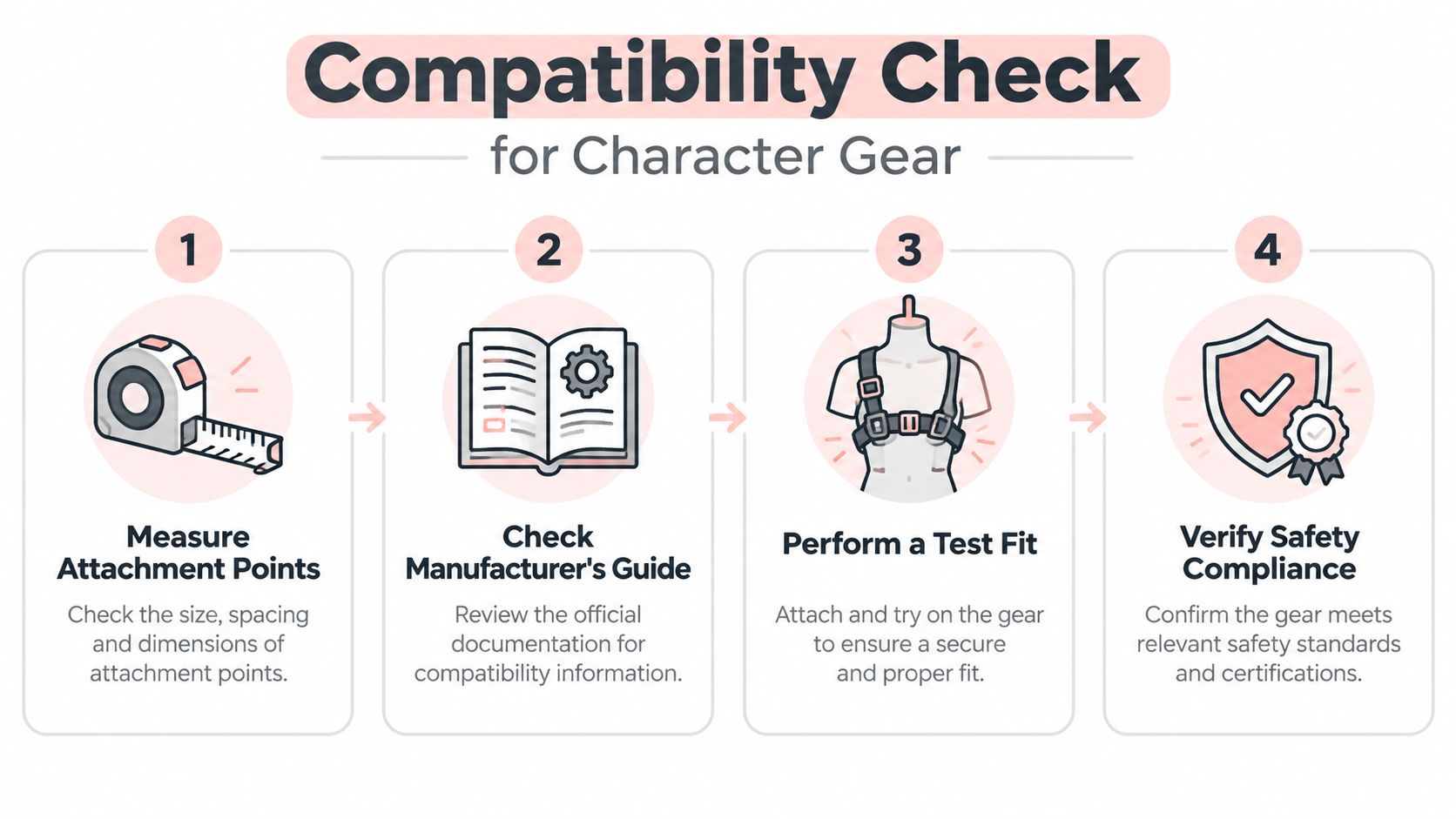
Use this sequence for stroller liners, seat covers, canopies, and toys:
- Identify every attachment point. Match snaps, straps, loops, clips, and openings to the gear's actual frame or seat. Similar connectors are not automatically interchangeable.
- Read the product guide. Look for approved accessories, prohibited add-ons, harness directions, and folding instructions.
- Perform a dry fit. Place the accessory on the empty gear. Open and close the seat, fold the stroller when appropriate, and check whether the item shifts, bunches, or catches.
- Inspect clearance. Character fabric must not cover buckles, restrict the harness path, block a release button, or touch moving joints.
- Test the final setup. Confirm that the original stroller or seat still operates exactly as its manufacturer describes.
Keep the child's body and the restraint system clear. Guidance on child-seat compatibility explains that only seat-belt webbing should contact the frame of a child seat in its child-seat compatibility guidance. For an infant car seat, do not place padding or fabric beneath the child unless the manufacturer specifically permits it.
Keep the car-seat standard intact
Use a rear-facing seat until the child reaches its maximum weight or height limit. For forward-facing seats, use the harness and top tether as directed. A correctly installed seat should move no more than 1 inch side-to-side or front-to-back, according to child-passenger-safety resources.
A character accessory must never make that check harder. Remove it if it creates slack, presses against the buckle, changes harness placement, or prevents you from checking movement. For model-specific planning, review this infant car-seat base and compatibility guide before buying decorative travel accessories.
For UK families, children normally use a child car seat until 12 years old or 135 centimetres tall, whichever comes first. Height-based seats remain rear-facing until the child is over 15 months old, according to the UK government's child-seat rules. Local regulations and the gear manufacturer's instructions should control the final decision.
Sizing, Gifting, and Registry Checklist
A successful character purchase fits three things: the child, the gear, and the household routine. Start with the child's current size, then check the product's measurement chart and intended stage. Don't size only by the character's popularity, and don't buy an accessory without identifying the exact piece of gear it will touch.
For apparel, leave enough room for comfortable movement without choosing a size so large that sleeves, legs, or closures become inconvenient. For plush toys and nursery accents, consider where the item will live, how it will be cleaned, and whether the child will use it during supervised play.
Build a registry around repeat use
Use this checklist before adding a character item:
- Confirm the stage: Newborn, infant, sitter, toddler, or preschooler.
- Match the product role: Clothing, toy, nursery accent, stroller accessory, or travel item.
- Verify the exact gear: Record the stroller, car seat, crib, or high chair model.
- Check the connection: Look for approved straps, clips, openings, and attachment points.
- Protect the harness path: Reject any accessory that changes buckle access or strap placement.
- Choose a flexible design: Select motifs that can move between nursery, outings, and play.
- Prevent duplicates: Add one expressive character item and fill remaining registry space with pieces your family will use repeatedly.
Gift buyers should ask the parents for the registry link or gear model before choosing a functional accessory. If that information isn't available, a character plush, book, apparel item, or gift card is usually easier to give without creating a fit problem. Practical registry planning becomes much simpler with this baby registry checklist.
The most confident purchase is rarely the item with the loudest design. It's the character piece that fits your child's stage, coordinates with your home, connects only where it should, and earns a place in the daily routine.
NINI and LOLI offers curated strollers, car seats, nursery pieces, toys, apparel, and character-friendly gifts for growing families. Visit NINI and LOLI to choose a memorable design, verify the gear you already own, and build a registry that feels personal as well as practical.