


If you're standing in the nursery, holding a tiny mouse in one hand and wondering whether the Maileg House of Miniature Dollhouse: Rooms will work for your child, you're asking the right question. The house looks dreamy in photos, but what matters is simpler, room sizes, figure fit, and whether you'll still like how it plays six months from now.
My short answer is this, buy it if you want a house that feels sturdy, collectible, and usable for long-term small-world play. Start with the layout, then decide whether your child needs the base house alone or the bonus room and bathroom too. If you want the full buying picture first, read the complete Maileg House of Miniature buying guide before you commit.

Stepping Inside the Maileg House of Miniature
The first time a child opens this house, it feels like an event. The roof lifts off, the rooms are ready, and play begins right away instead of after a long decorating project. That is why parents keep returning to it, the house arrives as a starter home, not an empty shell.
Maileg describes the House of Miniature as a large, freestanding wooden play structure with assembled dimensions of 80 cm high, 72 cm wide, and 40 cm deep, and a listed net weight of 10 kg (Maileg House of Miniature Dollhouse). Those measurements matter in daily use. This is not a lightweight toy you move aside after a few minutes, it sits more like a piece of children's-room furniture and stays part of the room.
Practical rule: if you want a dollhouse that can stay out and still feel special, choose one with enough presence to anchor a room.
The house is positioned for age 3+, which fits small-part play systems well. It is also described as having 4 spacious rooms plus an attic (Maileg dollhouse page), so the base layout already gives you a real home scene, not just a display piece.
For a first-time buyer, that is the sweet spot. You are not buying a project that needs a full room makeover before it is fun. You are buying a house that can be played with immediately, then slowly personalized as your child's stories get more detailed.
Start with your child's current play style. If they like sleeping scenes, choose figure and bedding pieces first. If they like kitchen pretend play, start there and build outward. If you want the full buying picture before you commit, read the complete Maileg House of Miniature buying guide.
The Room Layout from Attic to Ground Floor
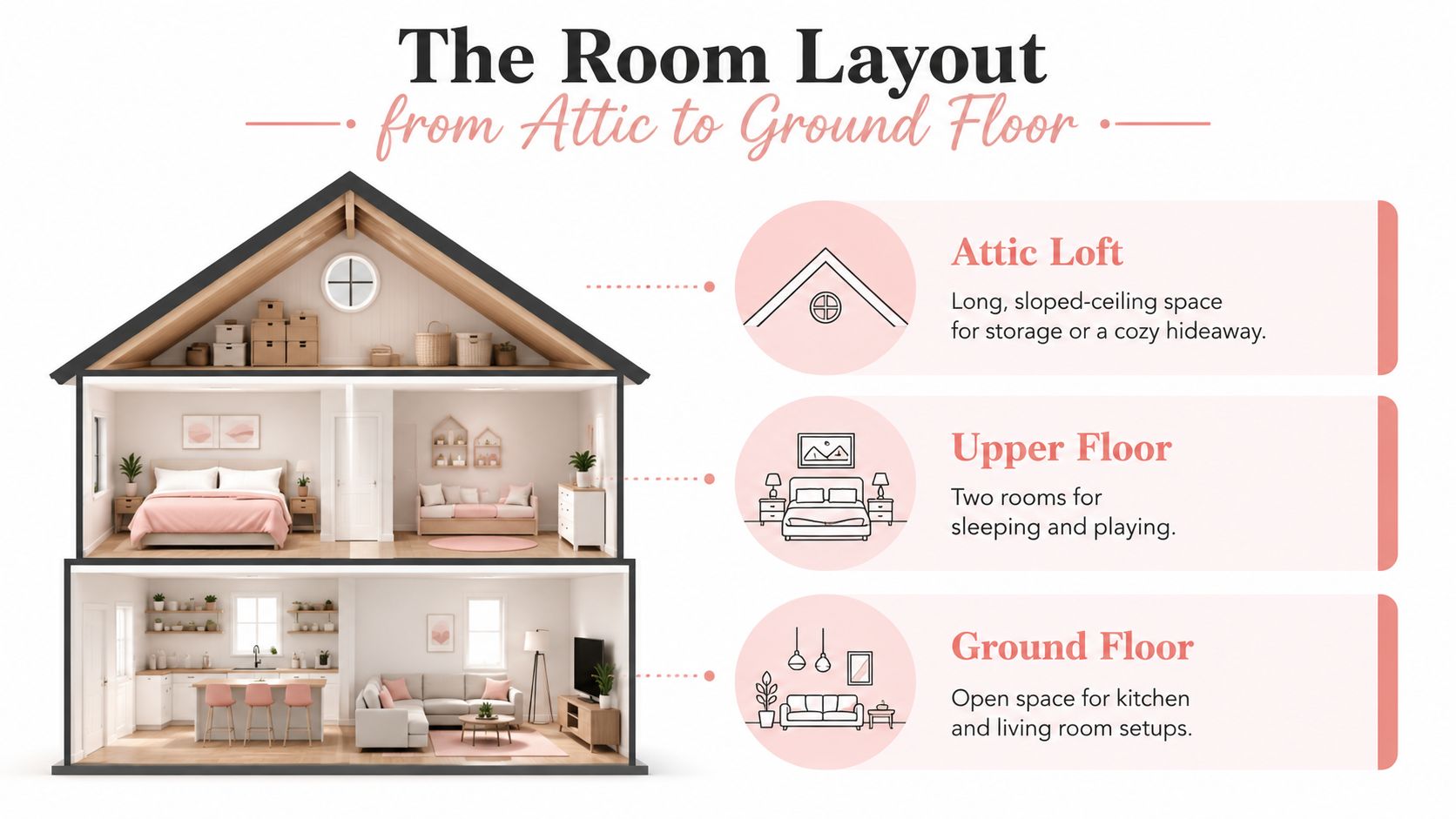
Start at the top and work down. The attic sits under the peaked roof, so it naturally becomes the tightest, most tucked-away space in the house. It works well as a bedroom, a reading nook, or a place to park tiny accessories, but tall pieces feel cramped there because of the sloped ceiling. A retailer listing gives the attic as 11.25 x 11 x 6 inches in one setup, which makes that limitation easy to see (Maileg retailer room sizes).
The middle level is split into two side-by-side rooms. One side usually works best as a bedroom, the other as a nursery, and that split suits the way kids play. The same retailer listing shows the upper floor rooms at about 15.25 x 15 x 18 inches and 11.25 x 11.5 x 11 inches, so one side clearly gives you more breathing room than the other (Maileg retailer room sizes).
The ground floor follows the same pattern with a kitchen and a living room. Those lower rooms are listed at roughly 15.25 x 15 x 12 inches and 11.25 x 11.5 x 12.5 inches (Maileg retailer room sizes). That is enough space for a simple setup, and that is the point. If you pack every room full, the house stops feeling fun to use.
Keep the open floor plan feeling light. A dollhouse gets more playable when each room has a job instead of being stuffed with everything at once.
Maileg's own product pages describe the house as having 4 spacious rooms plus an attic and show how it can be expanded with a bonus room and extra bathroom (House of Miniature product page, Maileg dollhouse page). That modular layout is the key strength here. You can start with the basic house, then add more space only when your child's play starts asking for it.
The back panel and room openings also matter. You want a house that is easy to reach into, easy to rearrange, and easy for small hands to keep using without frustration. That is what keeps the layout practical long after the first unboxing.
Which Figures and Furniture Fit Each Room
The first thing I tell parents is simple: buy for scale, not for quantity. The house suits the larger mouse and rabbit family figures best, because they sit naturally in the rooms and still leave space to play. Tiny baby mice work well as nursery details or tucked-in extras, but they should not be your main plan for the house.
One figure per room usually looks calmer and works better in daily play. Once you crowd in too many larger characters, the rooms stop feeling usable. The attic needs the most restraint because the sloped roof cuts into standing height fast.
Room fit at a glance
| Room | Best Figures | Fits Comfortably | Avoid |
|---|---|---|---|
| Bedroom | Larger mouse or rabbit family figure | Bed, wardrobe, one standing figure | Tall furniture that crowds the roof line |
| Nursery | Larger mouse family figure, or a small baby setup | Crib, high chair, one seated figure | Overfilling with too many accessories |
| Kitchen | Larger mouse or rabbit family figure | Table, chairs, stove | More than one or two larger furniture pieces |
| Living Room | Larger mouse or rabbit family figure | Sofa, armchair, small table | Bulky sets that block movement |
| Attic | One standing figure or a tucked-away sleeper | Reading nook, spare bed, storage corner | Tall wardrobes or stacked furniture |
The room-by-room fit matters more than the item count. For the basic layout, Maileg's own product pages describe the house as having 4 spacious rooms plus an attic, with room to expand later through add-on spaces. That is why the structure feels easy to plan around. Start with scenes that make sense, then add only what your child will use.
A nursery can stay very simple. A crib, a small chair, and a baby figure are enough to suggest caregiving play, and the Baby Mice Triplets in Matchbox are a nice reference point if you want a tiny nursery-ready set that keeps the focus on pretend care rather than furniture overload.
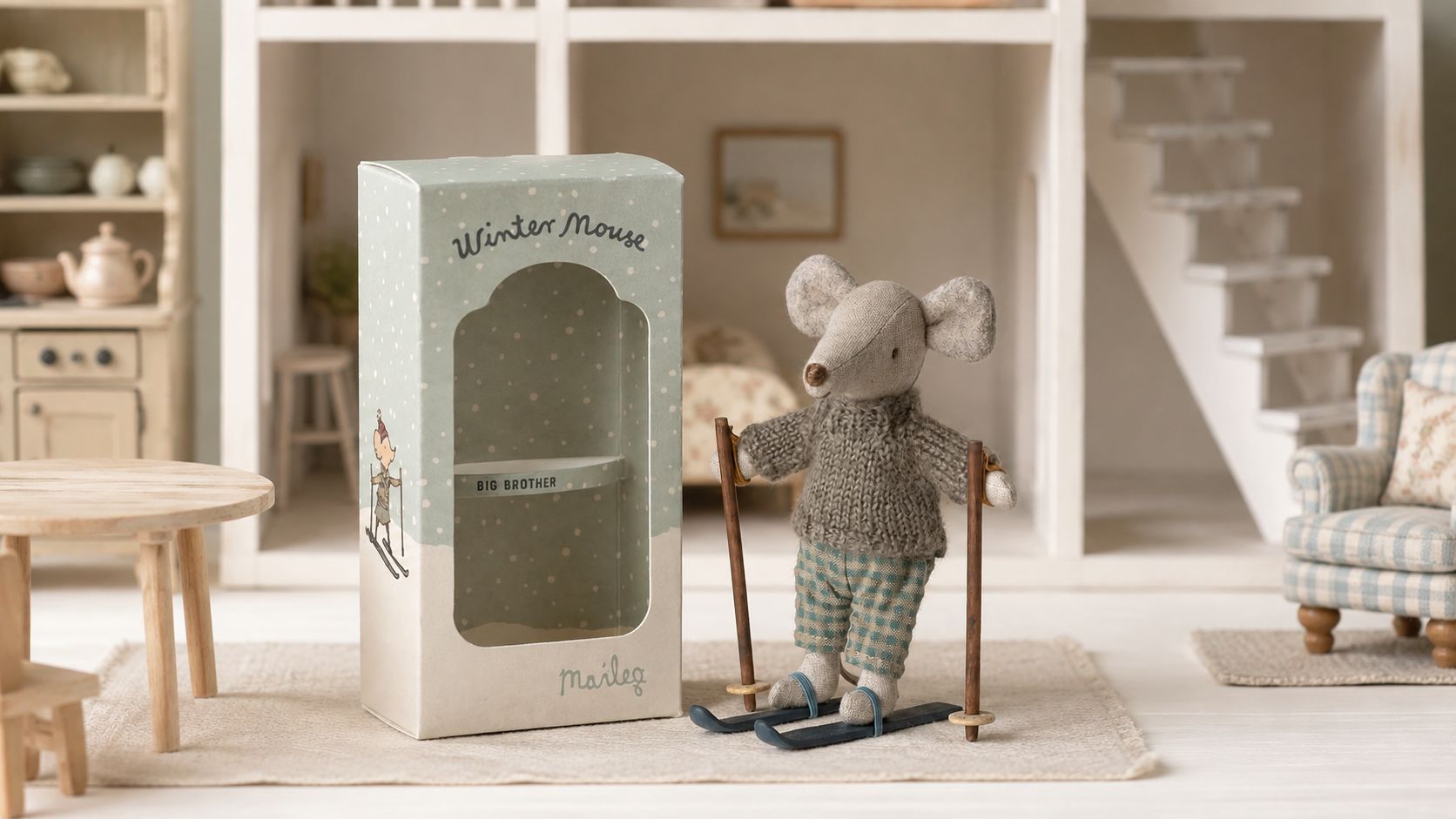
For a seasonal scale check, the Winter Big Brother Mouse with Ski Doll shows the size this house handles comfortably. It is a 5-inch figure with skis and poles, so it gives you a clean sense of how much presence a larger mouse has inside the rooms.
If you want more ideas for mixing figures with furniture, the Maileg mice furniture guide is useful. It helps you choose pieces that fit the house instead of filling it with things your child will outgrow in play value fast.
Room by Room Styling Ideas
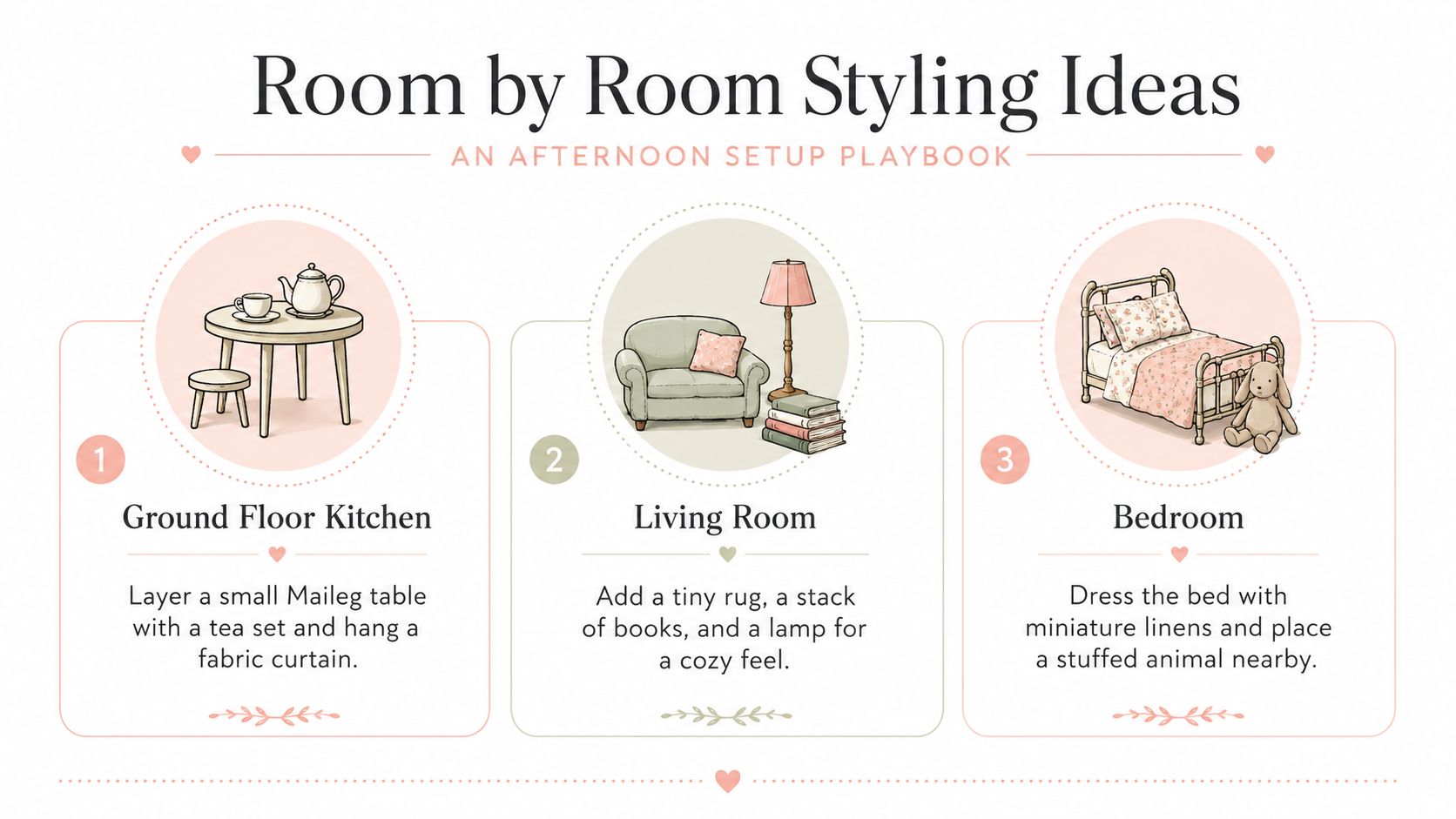
A Maileg house feels better when each room has a job. Start with the ground floor kitchen. A small table, a tea set, and one curtain or fabric scrap at the window are enough to make it feel lived in without crowding the space.
Keep the living room calm and open. A tiny rug, a lamp, and a sofa or armchair give children a place for slower play, like reading, visiting, or sitting down after dinner. That simple setup works longer than a packed room full of extras.
A room becomes more playable when it leaves room for a child's imagination to finish the scene.
Upstairs, the bedroom should stay restful. Use linen bedding, a bedside lamp, and a storybook on the pillow so the room already suggests what happened before play began. The nursery works best as a crib-focused space with a soft rug and a hanging mobile, which gives children a clear place for caregiving play.
If you want handmade textiles or tiny accessories, the On Pins & Needles doll patterns are a practical source of ideas. Fabric choices matter in a house this size. They add warmth and character without filling every corner.
For figures and room scenes, the Maileg's own world of royal-inspired play article is a useful reminder that small props can change the whole mood. A tiny crown, a folded blanket, or a chair at the window gives a room personality without making it feel busy.
Use the attic as the flexible space. It can hold a reading nook, an art corner, a spare bed, or storage, depending on what your child likes to play out most. I also like to rotate a few favorite figures and switch linens with the season. That keeps the house fresh and still easy to manage.
Expanding With the Bonus Room and Bathroom
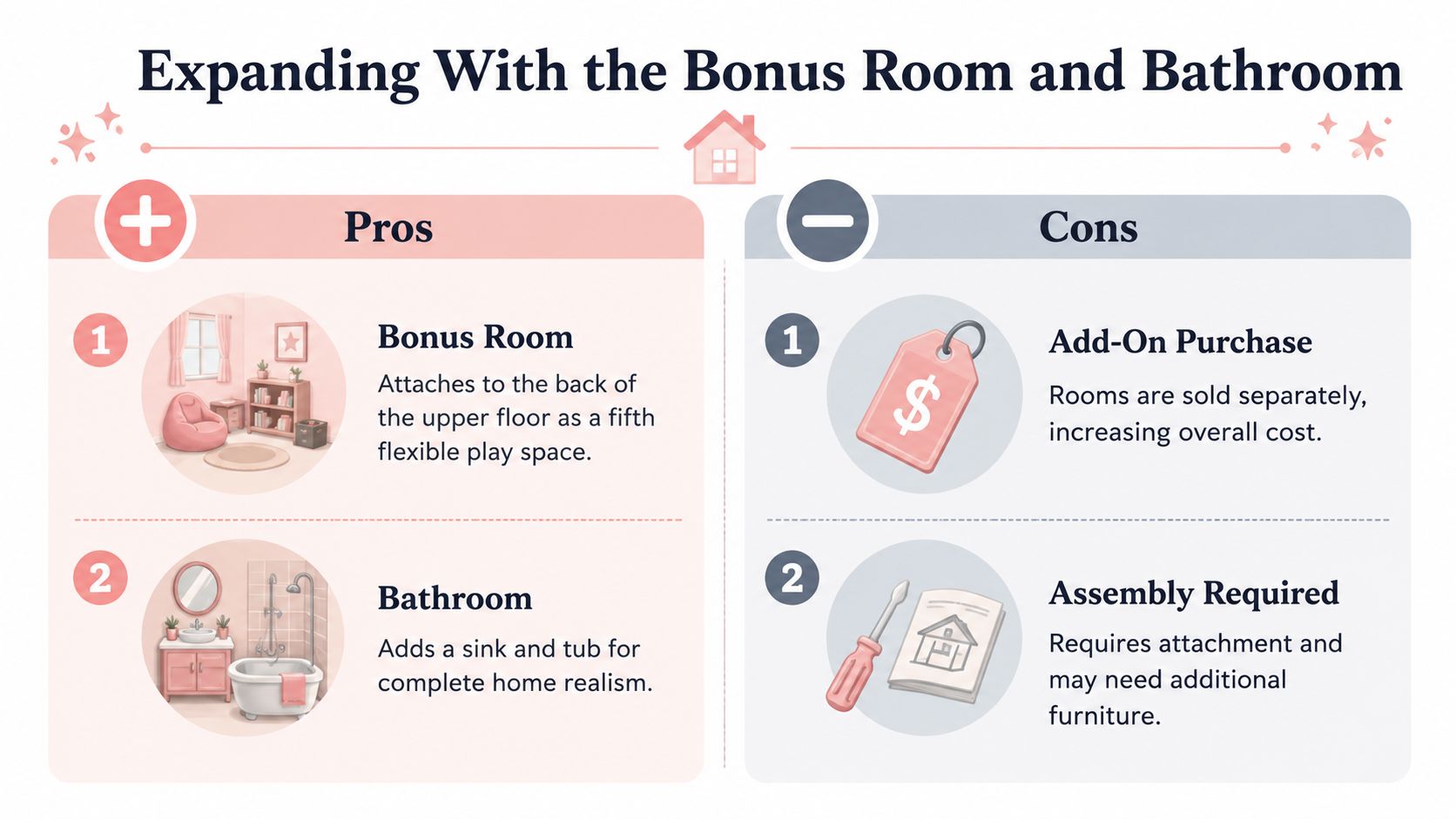
I'd buy the base house first only if you know your child is new to small-world play or you're watching budget carefully. If the house already feels like the right long-term toy, the bonus room and bathroom are the two add-ons that make sense. They don't just add pieces, they change how children tell stories.
The bonus room attaches to the back of the upper floor and gives you a fifth flexible space. That makes it useful as a second bedroom, a creative room, or a storage zone when the rest of the house is full. The bathroom adds the kind of daily routine scene that helps children build out realistic play, especially if they already like bedtime, wash-up, or family-morning stories.
Here's the buying rule I'd use:
- Choose the bonus room first if your child loves sibling stories, guest rooms, or extra furniture.
- Choose the bathroom first if bath-time and getting-ready scenes already show up in play.
- Buy both together only if you already know the house will stay in active use for years.
The trade-off is simple. More rooms mean more attachment, more furniture planning, and more room for play. They also mean a larger purchase, so it makes sense to match the expansion to your child's habits rather than collecting every release just because it exists.
If you want to add a bathroom scene without overthinking it, this bathroom set is the kind of piece that helps you visualize what that room can do, even before you finish the full styling plan.
Assembly, Placement, and Everyday Care
The house is easy to set up, and that matters when you want play to start without a long project. It arrives mostly assembled, with only minor setup for exterior pieces and optional rooms, plus furniture placement inside. If you are comfortable with a screwdriver, the process stays simple and practical.
Placement deserves as much attention as assembly. Put it on a sturdy low shelf, dresser, or play table so children can reach it without dragging it around. Keep it out of direct sunlight, since painted finishes can fade over time, and avoid busy corners where it may get knocked. A quiet, visible spot usually works best.
Practical rule: treat it like a small piece of furniture, not a toy bin, and it will stay beautiful far longer.
Care is easy to keep up with. Dust it with a soft dry cloth, skip chemical sprays, and hand-clean fabric pieces when they need it. Store seasonal furniture in labeled bins so you can swap pieces in and out without losing half of them to the toy basket.
Safety still matters. The house is designed for 3+, so keep small accessories away from younger siblings who reach into everything, and anchor the structure to a wall if your child is especially curious. Its weight and size help it feel substantial, but they also mean it should be placed with care.
For parents who want practical shopping help in one place, NINI and LOLI carries Maileg pieces alongside other nursery essentials, making it easier to compare room-building options without starting from scratch.
Gifting the House of Miniature
A dollhouse like this works best when the gift matches the moment. For a baby shower or first birthday, I'd treat it as a to-grow-into gift, not a toy for today. Pairing it with a single mouse or bunny figure gives the family something to set aside now and return to later with less pressure to build the full scene immediately.
For grandparents, this is the kind of present that feels thoughtful without being flimsy. The house has the kind of weight and presence that makes it feel like a keepsake, and multiple cousins can play around it during visits without everyone needing their own separate setup. If you're building a gift basket around it, luxury gifts for corporate clients is a useful reminder of how presentation changes the feeling of a gift, even when the object itself is already special.
A self-purchase is the easiest scenario to justify. You can begin with the base house, then expand slowly with the bonus room, bathroom, and a few seasonal pieces instead of trying to finish the whole world on day one. That approach keeps the budget sane and gives your child room to grow into the play.
If you're ready to shop, verify current availability on the product page, check that the package includes official Maileg materials, and make sure you're starting with at least three resident figures so the house feels alive from day one. For more gift ideas that fit this same thoughtful, premium style, browse unique baby gift ideas.
If you want help choosing the right Maileg pieces for your child's house, start with the room layout, then build from there. Visit NINI and LOLI to explore Maileg options and find the pieces that make this dollhouse feel ready to play with on day one.