


A tiny mouse arrives in a matchbox, and suddenly everyone in the family wants to know what comes next. Should you add a bed, a house, a sibling, or a few miniature accessories? The most satisfying answer usually isn't “buy the cutest piece.” It's to choose a compatible Maileg world that can grow naturally over time.
Maileg was founded in 1999 in Herning, Denmark, by Dorthe and Erik Mailil. Its name combines the family surname with the Danish word “leg,” meaning play, and the brand continues to present itself as a Danish-designed toy and home-interior brand with offices in Atlanta and Hamburg. That long design history helps explain why many families build their collection gradually, adding pieces that still feel connected years later. (Maileg's company profile)
If you're ready to begin, explore curated Maileg sets at NINI and LOLI and use the guide below to choose a starting point that fits your child, your space, and the collection you hope to create.
Introduction to Building Your First Maileg World
A child chooses a mouse in a matchbox, then asks for a bed, a chair, or another small companion. Before long, parents face a practical decision: how can each addition belong to the same story rather than sit unused because its proportions do not match?
Start with a compatible play environment. A character becomes more versatile when it has a place to sleep, sit, dress, or welcome someone else. One bed can support bedtime games. A chair can turn a figure into a host at a miniature meal. A house can give future purchases a shared setting.
The key choice is the scale family. Treat it like building with blocks: pieces from the same system connect easily, while mismatched sizes can leave a character with furniture that is too small or too large. Choose one character family first, then select an anchor piece, such as a bed, house, or table, that gives later additions a reliable home.
You do not need a complete room at the start. A modest collection can offer plenty of play when its pieces work in more than one scene. A character plus one practical anchor, followed by an accessory or companion, creates a clearer path than several unrelated figures.
A small, compatible beginning creates more possibilities than a large collection with mismatched proportions.
This approach also makes future buying easier. Before choosing an accessory, check the character size it is designed to support. The right anchor piece acts like a foundation: clothing, furniture, and companions can be added without rebuilding the whole setting. Start with the complete Maileg buying guide for beginners to choose your first scale family.
Maileg's established design language gives a collection a consistent feel as it grows. For parents, that continuity can make a first purchase feel like the beginning of a lasting creative world rather than a single novelty.
This guide covers the Best Maileg Sets for Starting or Expanding a Collection, size compatibility, play styles, useful additions, gifting, storage, seasonal buying, and care. Explore curated Maileg sets at NINI and LOLI, then build outward from the anchor piece that best suits your child's play.
What Makes a Great Maileg Set
A child opens the first box and immediately wants to add a bed, chair, or companion. The collection will support that next idea only if its pieces belong to a compatible size family. A strong Maileg set therefore combines three qualities: the pieces fit together, the theme invites play, and the materials suit the way your family will use them. Character appeal starts the story, while scale compatibility keeps the story workable.
Start with one size family
Maileg's size system connects older categories with numbered sizes. Size 1 is close to Mini, size 2 sits between Mini and Medium, size 3 corresponds to Medium, size 4 to Maxi, and size 5 to Mega. Products can often be mixed, but scenes usually feel most natural when the main character, furniture, and accessories stay within one compatible scale family.
Scale works like the height of building blocks. A bed, chair, house, and figure need matching proportions for a child to use them together. Practical measurements help: a vintage double bed fits two mice up to 15 cm, a single bed fits one mouse up to 12 cm, and a cradle fits baby mice up to 8 cm. These examples show why the figure should come before the furniture decision.
Check the intended character size before adding an accessory. A lovely bed that cannot hold the chosen figure may still look attractive on a shelf, but it will not perform its planned role in play. One anchor piece in the correct scale gives later purchases a dependable place to belong.
Choose a theme that can grow
A theme gives children a reason to revisit the same figures. A mouse family supports home routines and relationships. A rabbit or bunny can form a character-led gift with clothing and bedding. Seasonal figures add a special occasion, while furniture and textiles give an established scene more detail.
The strongest starter set has a clear next step. Ask whether the first figure could later receive a bed, wardrobe, bath, chair, or companion. If several additions fit the same size family, each purchase contributes to one usable world rather than creating separate displays.
A single character can be enough to begin. What matters is the path it creates.
Notice the material mix
Maileg pieces use different materials for different functions. Furniture may combine metal and cotton with polyester stuffing. Figures may use cotton and linen with polyester or PE pellets, and some seasonal characters use recycled polyester filling. Material details can help parents choose pieces that suit handling, sitting, dressing, or display.
Metal-and-textile furniture keeps its shape, while weighted figures can sit more steadily in chairs, beds, and vehicles. Soft characters benefit from gentle handling and dry, thoughtful storage. Rigid furniture needs protection from bends and scratches.
Age affects the choice too. Miniature teacups, shoes, and food pieces may contain tiny detachable parts, so read age grading and packaging warnings before offering them to children under 3.
For measurements and character proportions, consult this Maileg mouse guide by size before choosing the first furniture piece.
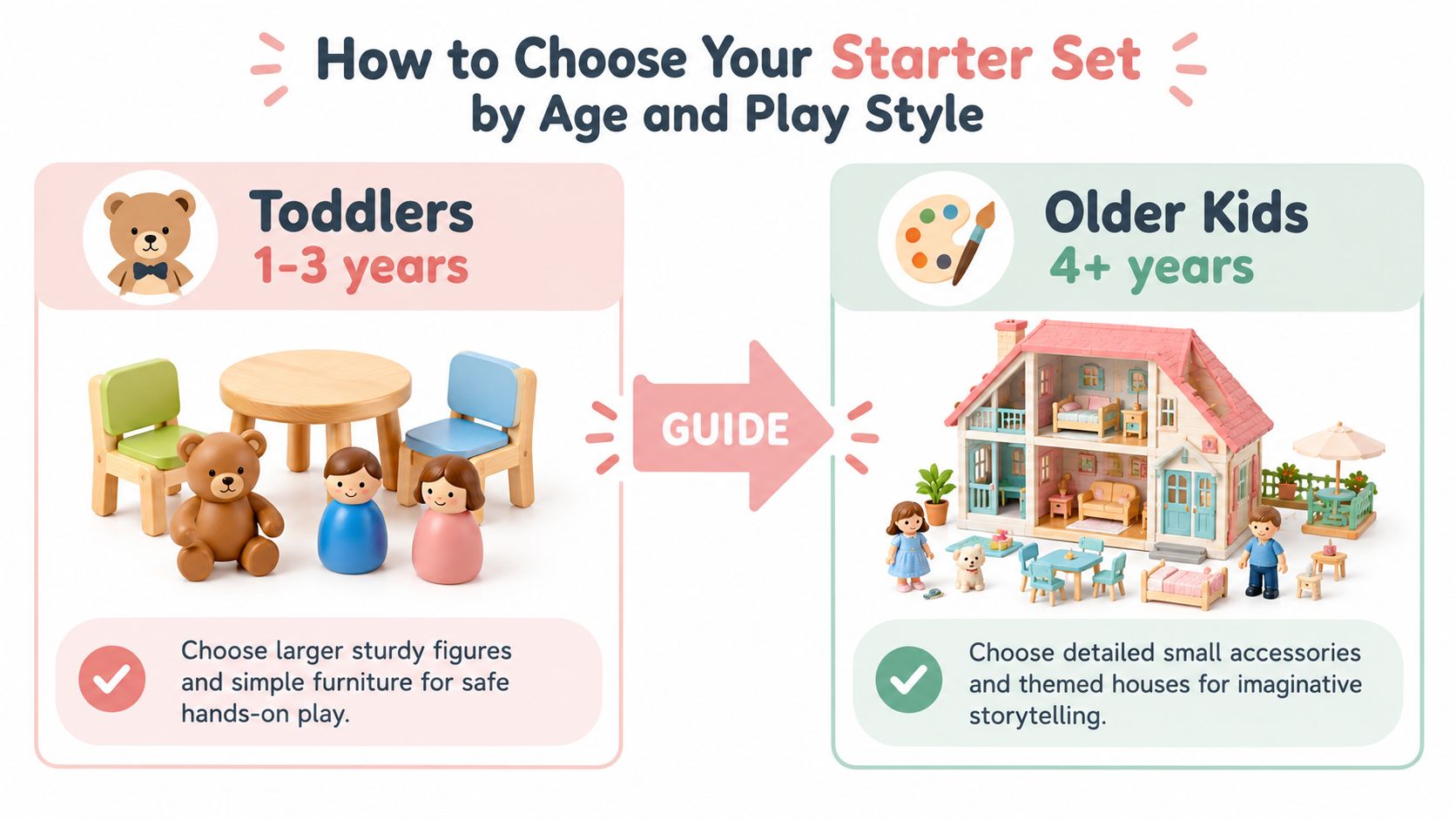
How to Choose Your Starter Set by Age and Play Style
A starter set should match the way your child will use it. A toddler may need larger, simpler pieces that are easy to grasp, while an older child may be ready for detailed furniture, clothing, and small accessories. Display plans matter as well. One family may want a nursery shelf with a single character, while another may want a house that supports everyday imaginative play.
The most helpful decision is the scale family. Treat it like choosing the size of a room before buying its furniture. A character, bed, chair, and later accessories should belong to a compatible group, so each new piece has somewhere to fit. Starting with one scale and one anchor piece prevents a collection of charming items from becoming a group of mismatched miniatures.
Match the collection to the child
For younger children, begin with one soft character and the simplest sturdy accessory available in the same scale. A figure with a bed or chair creates an easy action, such as putting the character to sleep or sitting down for a story, without filling the play area with loose parts.
For children ready for detailed role play, a miniature home can become the collection's anchor. Maileg's Mouse Hole Farmhouse provides a setting for Mum and Dad, Big Brother and Sister, Little Brother and Sister, and Baby Mice. Its rooms give future purchases a clear purpose, because children can add furniture and residents to an existing world rather than collecting unrelated pieces.
Independent size information places Baby mice at around 8 cm, Little Sister at around 11 cm, Big Sister at around 13 cm, and parents and grandparents at around 17 cm. Medium and Maxi mice are plush toys rather than figures intended for dollhouse play. Use these proportions as a practical check before choosing beds, chairs, or a house.
Use the finder below
| Play Profile | Recommended Size Family | Best Starter Focus | Why It Works |
|---|---|---|---|
| Gentle hands-on play | A larger, simple compatible figure | One character and one sturdy furniture piece | Fewer loose parts make the scene easier to use |
| Detailed role play | A small mouse family scale | A mouse, bed, and household accessory | Each addition creates a new everyday story |
| House-centered play | The scale suited to the chosen house | A farmhouse with compatible residents | The home gives later purchases a clear purpose |
| Shelf display with occasional play | One character scale | A character, textile, or seasonal accessory | The collection looks complete with few pieces |
| Family storytelling | A scale that accommodates several roles | Two related characters and shared furniture | Children can act out routines, visits, and celebrations |
Use the table as a starting point, not a strict age rule. Children who enjoy arranging objects may prefer furniture and a house. Those who carry toys from room to room may get more use from a character and clothing. For a gift, one meaningful anchor is often easier to understand than a set requiring extensive explanation.
Practical rule: Choose the piece that gives the collection a home, a routine, or a relationship.
Before ordering, confirm the figure's scale, check accessory dimensions, and decide where the set will live. The Maileg mouse buying guide can help you compare collection paths while keeping practical fit in view.
Recommended Starter Sets and Natural Expansion Paths
The most useful starter combinations create a simple scene first, then add detail. Instead of buying several pieces with the same function, choose one anchor and let each later purchase introduce a new activity.
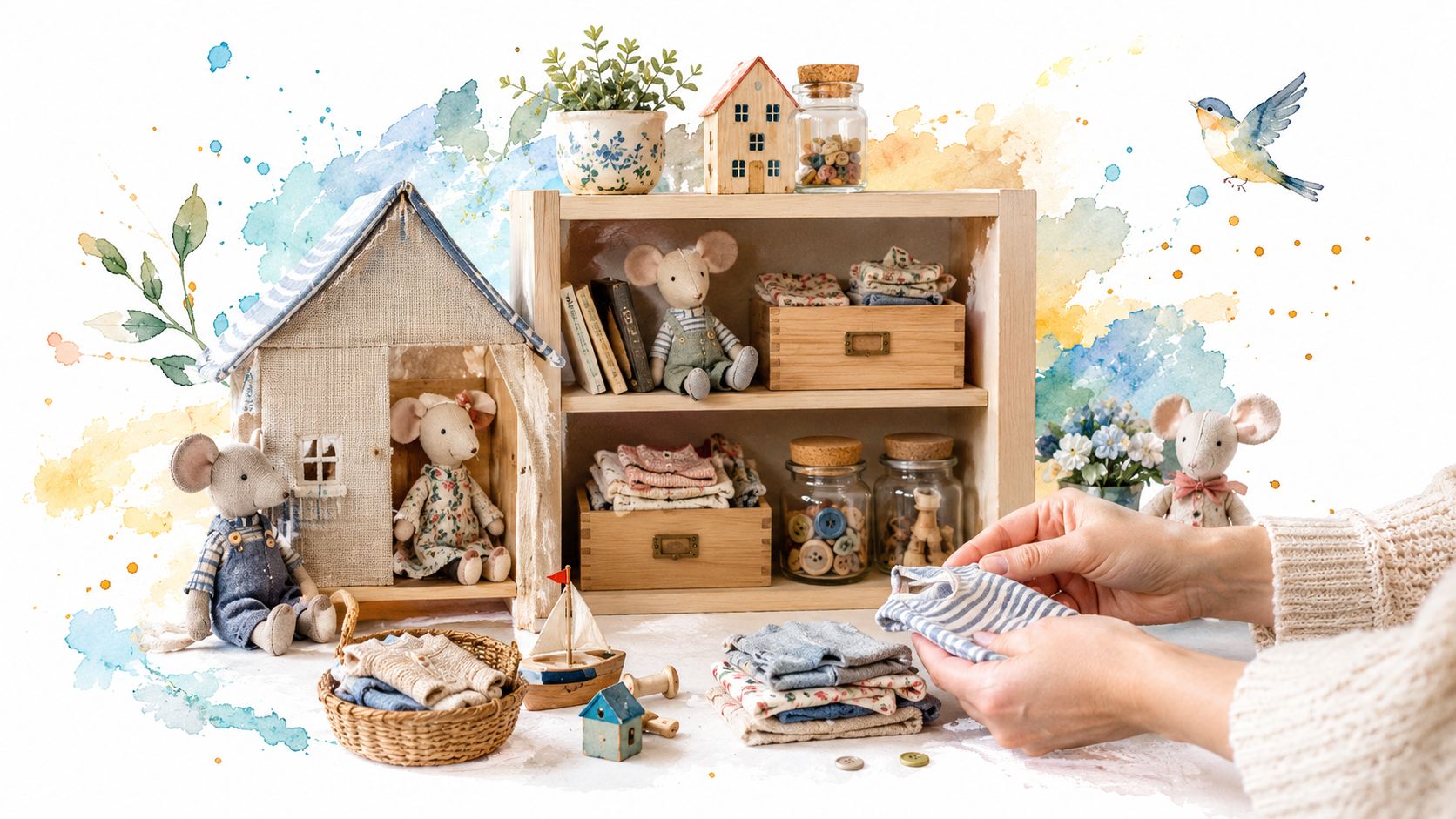
The mouse family and farmhouse path
For a child who loves family stories, begin with one or two compatible mice and the Mouse Hole Farmhouse as the main environment. The house gives the characters somewhere to live, while the family roles create immediate prompts for play: bedtime, breakfast, visits, tidying, and caring for a baby.
A sensible expansion order could be:
- First addition: A bed or cradle suited to the chosen mouse size.
- Next detail: A chair, rug, or small household piece that changes the room.
- Later expansion: Additional family members whose proportions match the house and existing furniture.
This route works because the house stays useful as the collection grows. It also prevents a common mistake, buying several characters before giving them somewhere to interact.
The character and bedding path
A bunny or rabbit paired with bedding is a quieter introduction. It suits a child who enjoys caring routines, arranging a sleeping space, and changing clothing rather than managing a full dollhouse.
Start with one figure and a correctly scaled bed, blanket, or clothing piece. Then add a chair, wardrobe, or bath item only when your child has begun using the original scene in different ways. The goal isn't to fill every room. It's to add a new action each time.
The seasonal character path
A seasonal mouse, rabbit, or other character can be an appealing gift when you want the collection to mark a holiday or family tradition. Seasonal pieces often work best as additions to an existing scale family, especially when they can share furniture or clothing with characters already at home.
Availability may depend on release timing. A Maileg Autumn Winter 2026 announcement lists pre-orders opening on 1 July 2026, while the brand's 2026 collection page includes stock-notification prompts. If a seasonal piece matters for a birthday or holiday, check release information early rather than assuming it will remain available whenever you decide to buy.
Build scenes, not duplicates
A useful collection might move from bedroom to bathroom, kitchen, or celebration space. That progression adds narrative variety while keeping the same characters at the center.
For families who also enjoy organizing collectible figures, a collection guide with practical display ideas offers a helpful reminder: decide how items will be stored and displayed before the collection becomes crowded. The principle applies here too. A small basket for accessories and a defined shelf for the house can make expansion feel intentional.
Explore Maileg houses and dollhouse options before adding more furniture. The house determines the scale, the available space, and the types of scenes your child can create.
Care Storage and Styling Ideas for Lasting Play
Maileg pieces combine textiles, metal, stuffing, and weighted materials, so they don't all need the same care. A simple routine protects the collection without making it too precious to play with.
Keep materials in good condition
Dust metal furniture with a soft, dry cloth. If a textile section needs attention, use gentle spot cleaning rather than soaking the entire piece, and allow it to dry fully before returning it to a shelf or house.
Cotton and linen figures benefit from clean, dry storage. Keep them away from damp areas and avoid compressing them under heavy toys. Weighted figures can sit well in furniture, but storing them in a crowded box can crease clothing and flatten soft forms.
Make tiny pieces easy to find
A lidded container or divided organizer works well for miniature dishes, clothing, shoes, and food pieces. Store accessories by room or activity rather than by character. One small section for bedroom items and another for kitchen pieces makes independent play easier because children can find the objects needed for a scene.
Use a small tray when playing with particularly tiny accessories. It defines the play area and helps adults notice what needs to be returned to storage. For mixed-age homes, keep detachable miniature pieces out of reach of children who may still put objects in their mouths, following the product packaging and age guidance.
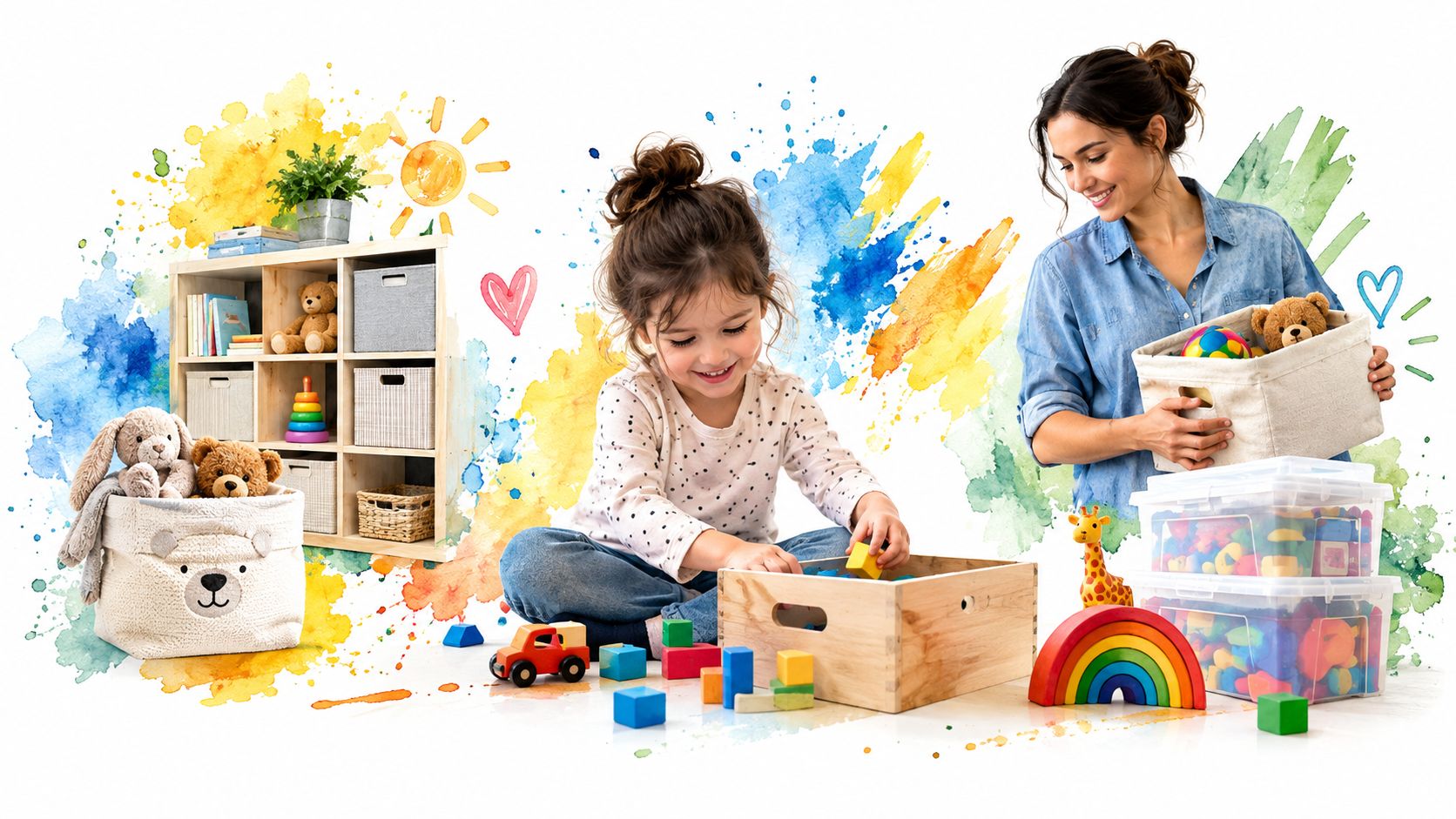
Style the collection for daily life
A shelf vignette can include the house, one or two figures, and a single accessory that tells a story. In a nursery corner, place the collection at an adult-accessible height if it includes tiny pieces. During seasonal periods, rotate one character or textile rather than adding many new decorations.
Leave some open space around the house. The collection looks calmer, and your child has room to remove figures and return them without knocking over the scene. Styling should support play, not turn the display into something children can't touch.
Budgeting Gifting and Where to Buy at NINI and LOLI
A collection doesn't need to grow all at once. A practical starting budget is easier to manage when you choose one anchor plus two accessories, then pause to see how your child uses them. If the bed becomes the center of every game, the next purchase might be a chair or wardrobe. If the house remains untouched while the character travels everywhere, clothing or a small portable accessory may be more useful.
Registry and gifting can make gradual collecting feel natural. A grandparent might choose the first mouse, another family member can add bedding, and a later birthday can introduce a house or family member. Each gift then has a connection to the previous one rather than becoming another isolated miniature.
Choose gifts by use, not just appearance
For a young child, choose a larger figure or simple compatible furniture and check the product's age guidance. For a child already playing with a mouse house, a new room accessory or outfit can feel personal because it expands an established story.
A seasonal release can be a thoughtful tradition, but timing matters. Pre-orders and stock notifications may affect when a particular item can be purchased, so sign up for relevant alerts when a piece is tied to a specific celebration. You won't need to rush every purchase, but planning helps when the gift has a fixed date.
Families can browse Maileg toys online through NINI and LOLI, where the store provides a curated selection alongside gift cards and registry support. The shop also offers online ordering, store pickup, and customer assistance for families who want help narrowing down a suitable gift.
Decide when an expansion is worth it
Add to the collection when the new item introduces a new role, room, routine, or relationship. A second bed may be useful if your child's play needs it, but another decorative object with no clear place may wait.
This approach keeps spending connected to play value. It also makes each purchase more emotionally meaningful, because the collection records birthdays, holidays, and shared stories rather than accumulating objects.
Start Your Collection with Confidence Today
The strongest Maileg collection begins with a clear decision, not a large order. Choose one scale family, select an anchor that gives the characters somewhere to live or rest, and add accessories that create new actions. That simple sequence helps parents avoid mismatched furniture and keeps future purchases useful.
For a first collection, a mouse and compatible bed may be enough. For a house-centered playroom, Mouse Hole Farmhouse can provide the setting. For a child who prefers quieter care routines, a rabbit or bunny with bedding offers a focused beginning. An established collector can look for the missing room, role, or seasonal detail rather than adding another piece with the same function.
Keep age guidance and small parts in mind, store accessories in a dedicated place, and buy seasonal pieces with release timing in view. The result is a collection that feels personal, playable, and ready to grow at your family's pace.
NINI and LOLI offers a curated selection of Maileg characters, houses, furniture, and accessories for families building a compatible miniature world. Visit NINI and LOLI to choose a thoughtful starter set or find the next piece that will give your existing collection a new story.