


You're staring at a half-finished registry, measuring tape in hand, wondering how a crib, changing table, and future toddler bed will fit into one small nursery. The answer may be a convertible crib and changing table setup, but only if you judge it by the entire ownership journey, not by the newborn stage alone.
A smart purchase should earn its space through multiple stages, remain practical after diaper changes end, and meet current safety requirements. Use this guide to decide what configuration fits your room, your budget, and your plans. When you're ready to shop, explore NINI and LOLI for nursery furniture and baby essentials selected for growing families.
What a Convertible Crib and Changing Table Setup Actually Is
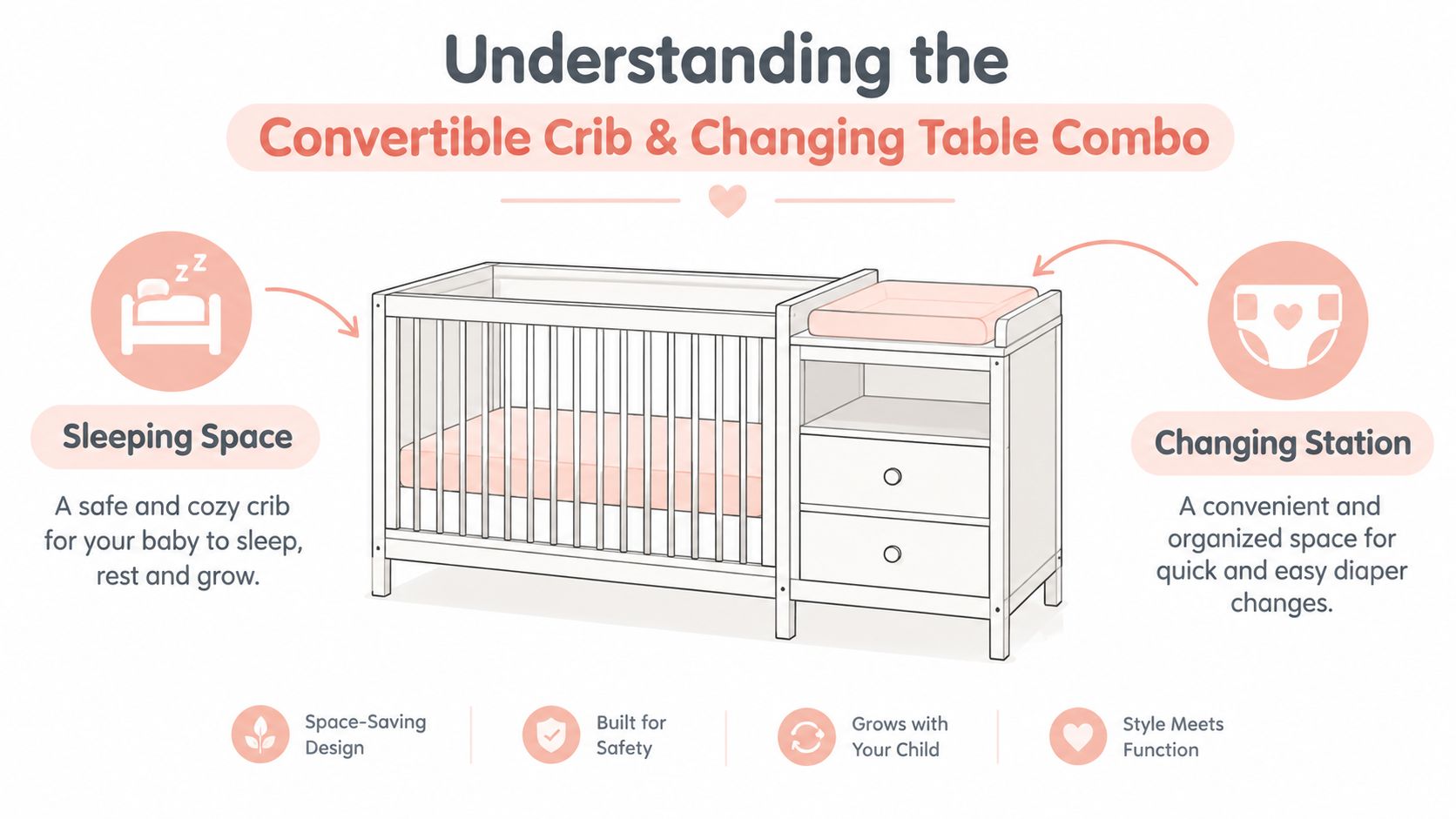
A convertible crib and changing table setup combines sleeping furniture with a diapering station in one coordinated nursery arrangement. Depending on the design, the changing surface may be a removable topper secured across the crib, or a contoured pad placed on a matching dresser. The crib itself is built to reconfigure as your child grows, rather than being discarded after the infant stage.
That can replace three separate purchases over time: a full-size crib, a toddler bed, and a changing surface. The value isn't just visual coordination. In a compact room, combining functions can leave space for a glider, laundry basket, or floor area for dressing and play.
The lifecycle question parents should ask
The changing function usually serves the shortest phase. A crib can remain useful through infancy and the first major furniture transition, while diapering needs may end earlier. That makes the dresser, storage, and conversion design just as important as the changing pad itself.
For a small nursery, this setup makes sense when:
- Floor space matters: One coordinated footprint can reduce visual and physical crowding.
- You want fewer replacements: The frame can move from crib use into later configurations.
- Storage is essential: A dresser-mounted changing surface keeps supplies close while giving the room long-term storage.
- You're planning beyond infancy: The purchase has value only when the furniture remains useful after diaper changes stop.
The practical decision is simple. Don't pay for a changing feature that makes the crib awkward, difficult to clean, or unusable after the early months. Focus on a stable sleeping space, accessible storage, and conversion parts you can locate years later. A helpful overview of coordinated nursery arrangements is available in this nursery furniture sets guide.
3-in-1 vs 4-in-1 Convertible Cribs and How They Grow
The right question is not how many conversions appear on the box. Ask how long each configuration will serve your child, then compare that useful time with the upfront cost.
A 3-in-1 convertible crib typically covers a full-size crib, toddler bed, and daybed. The toddler setup uses a low guardrail, while the daybed removes the rail and leaves a sofa-like frame for sleep or quiet reading. For a small nursery and a family focused on the early years, these stages often cover the furniture you will use.
A 4-in-1 convertible crib adds a later bed configuration, commonly with longer rails and a headboard-and-footboard arrangement. Choose it when you have a clear plan to keep the frame for that later bed. The extra stage adds value only if the final size fits your room, the required mattress fits your budget, and the conversion parts remain available.
Here is the lifecycle math in practical terms:
- 3-in-1: You pay for the crib, toddler bed, and daybed stages, then stop when your child needs a larger bed.
- 4-in-1: You pay more or accept more stored hardware for one additional stage. That cost makes sense only if your family reaches and uses it.
- Changing years: Diapering usually ends before the crib's useful life, so judge the entire furniture system by its later storage and bed options, not by the changing feature alone.
The crib, toddler, and daybed stages generally use the same crib mattress footprint. The later bed requires its own mattress. Before buying, check whether the toddler rail, daybed parts, and final bed rails are included, clearly labeled, and stored with the original hardware. If rails are sold separately, record the exact model information and keep the instructions.
For a 4-in-1 model, store every bolt, dowel, and rail in a labeled bag after assembly. A missing connector can turn a planned future bed into an expensive replacement project.
Families considering a larger-bed conversion can review this guide to cribs that convert to full beds before choosing the final configuration. This Albany family furniture from Tip Top resource also shows how a crib-to-bed concept fits into longer-term home furnishing plans.
Use the stage you can name, measure, and maintain. If you cannot confirm the final rails, room clearance, or mattress plan, buy the 3-in-1 and spend the difference on durable storage and a comfortable, well-fitted crib mattress.
Integrated vs Separate Changing Tables
The changing surface determines how the nursery feels at every diaper change. An integrated topper keeps the station attached to the crib or matching dresser, while a separate changing table gives you a dedicated piece that can move elsewhere once diapering ends.
An integrated option is especially useful when every inch matters. Supplies can stay in a nearby drawer, the changing station remains part of the crib arrangement, and you don't need to create a second furniture footprint. The trade-off is reach. If the surface sits high or too close to the crib rails, a tall parent may find repeated changes uncomfortable, especially during overnight routines.
A separate changing table offers a dedicated working height and more flexibility around the room. Open shelving can make supplies easy to see, and the piece can later move to another room or serve as storage. It does take additional floor space, so measure the room with drawers and doors fully open rather than relying on the closed footprint.
Make the decision around real routines
At a 2 a.m. change, you want the baby, wipes, clean diaper, and disposal method within easy reach. You also want to avoid turning around while holding a child or leaving the surface to retrieve supplies.
| Factor | Integrated Topper | Separate Changing Table |
|---|---|---|
| Floor-space impact | Uses the crib or dresser footprint | Requires its own location |
| Supply access | Often paired with nearby drawers | May offer shelves or dedicated storage |
| Room flexibility | Stays tied to the nursery arrangement | Can move to another room later |
| Parent comfort | Depends heavily on surface height and reach | Dedicated height may feel more natural |
| After diapering | Topper can be removed or stored | Table can become storage furniture |
| Best for | Compact rooms and tightly planned layouts | Larger nurseries or families wanting a dedicated station |
The option I recommend
For an apartment or compact nursery, choose an integrated changing surface only when it has a secure attachment method, clear weight guidance, and enough room to work without crowding the sleeping area. For a larger room, a matching dresser with a properly secured changing pad often gives you the strongest long-term use because the storage remains after diapering ends.
Don't buy based on the changing feature alone. Stand beside the display if possible. Check whether your elbows, wrists, and supply hand can work naturally at the surface. A beautiful setup that forces awkward reaching will feel expensive every night.
Safety Standards Every Parent Should Check
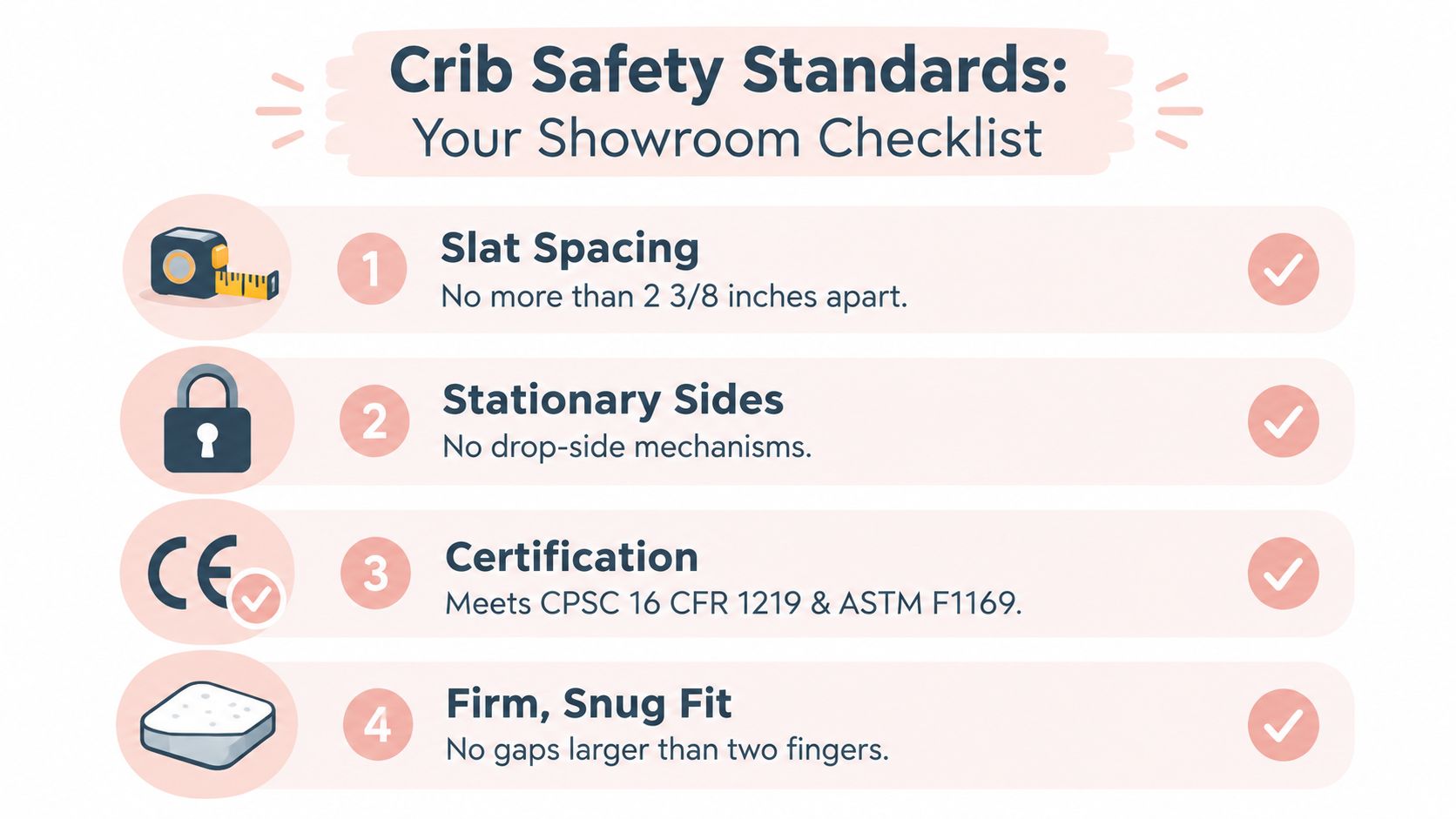
A convertible crib can look like a smart space saver, then fail the basic safety check at the store. Inspect the crib, the changing attachment, and the paperwork before judging its finish or storage. U.S. crib standards established in 1973 set a maximum slat spacing of 2 3/8 inches and addressed mechanical hazards. Crib-related infant deaths reportedly fell from about 200 per year to about 50 per year after regulation began, showing how strongly safety rules shaped crib design.
Federal crib rules took effect in June 2011. They eliminated traditional drop-side cribs and required stronger slats, durable mattress supports, anti-loosening hardware, and more rigorous testing. The rule covers cribs sold in the United States, including second-hand sales. An older resale crib is not a bargain if the seller cannot show current compliance. Review the federal crib safety rule.
What to verify before you buy
Ask for written documentation, then inspect the display yourself. A salesperson's assurance is not a substitute for model-specific instructions or compliance information.
- Stationary sides: Reject any traditional drop-side mechanism. A crib made after June 2011 should meet current federal crib requirements, consistent with HealthyChildren.org's nursery safety guidance.
- Narrow slat spacing: Confirm that no gap exceeds 2 3/8 inches.
- Strong mattress support: Press the mattress base and inspect its fasteners. It should feel rigid, with hardware that stays secure during adjustment.
- Conversion hardware: Verify that rails, bolts, and fasteners are supplied for the exact crib model. Universal-looking parts are not automatically compatible.
- Changing restraint: CPSC classifies an attachment that converts a crib or play yard into a changing table as a changing product. The applicable standard incorporates ASTM F2388 and addresses structural integrity, restraint integrity, and warnings. Review CPSC baby-changing product guidance.
- Weight guidance: The intended domestic-use limit is children up to 30 pounds, or 13.6 kilograms. Stop using the surface at that limit, or sooner if your child becomes too active for the setup.
CPSC's mandatory baby-changing product standard became effective on June 26, 2019, for products manufactured or imported on or after that date. In 2022, the rule incorporated ASTM F2388-21 into 16 CFR 1235, replacing the earlier ASTM F2388-18 baseline. Check current compliance information when reviewing an older listing or hand-me-down. Read the CPSC announcement about the baby-changing product standard.
Practical rule: A restraint strap cannot replace supervision. Keep one hand on your baby while changing them, and set every needed supply within reach first.
The changing surface should be firmly attached, cleanable, and fitted with a secure restraint and locking mechanism. Raised side edges help reduce sideways falls. Australian safety guidance recommends barriers of at least 10 cm, no gaps that could trap fingers or limbs, and locking devices strong enough to prevent movement or collapse. CPSC FAQ guidance reports that infants can suffer serious injury from falls up to 1.5 meters. Read the CPSC baby-changing safety FAQ.
Material choice belongs after construction and certification. For a broader guide to nursery materials and purchasing considerations, see non-toxic baby furniture. Avoid loose wedges, aftermarket bedding, and toppers not specifically rated for the furniture beneath them. A safe setup may serve your child through several stages, but only if every attached component remains approved, stable, and properly used.
Mattress Fit and the Conversion Hardware That Matters
A convertible crib is only as dependable as its mattress fit and its stored hardware. A standard full-size crib mattress measures 28 by 52 inches, and the mattress should fit snugly against the crib frame. The familiar two-finger check is practical: if more than two fingers fit between the mattress and the crib side, the fit needs attention.
Coil, foam, and innerspring pocket-coil mattresses each create different ownership experiences. Coil designs may feel heavier, foam is often easier to lift during sheet changes, and pocket-coil construction can affect the balance between support and portability. Don't choose by material name alone. Lift the mattress, check the cover, and confirm that it matches the crib manufacturer's requirements.
Keep the same footprint working
The major advantage of a convertible crib is that the crib mattress can continue through the toddler bed and daybed stages. That means the infant mattress isn't automatically a short-term purchase, provided it remains in good condition and fits the converted frame correctly.
A waterproof protector is worth adding from the beginning. It protects the mattress from leaks without changing the frame, and it makes middle-of-the-night sheet changes less disruptive. For fitted-sheet planning, use this guide to fitted crib sheets.
Store the parts before you need them
Conversion kits usually include different components for different stages:
| Stage | Approximate Age | Hardware Needed |
|---|---|---|
| Crib | Newborn stage | Original mattress support and crib hardware |
| Toddler bed | Around 12 to 18 months, depending on readiness and product guidance | Toddler guardrail kit |
| Daybed | After the guardrail stage | Headboard or frame configuration with the crib rail removed |
| Later bed | When the family chooses to make the final conversion | Longer side rails and the specified bracket set |
The age ranges above are planning examples, not a substitute for the product manual or your child's readiness. Don't place conversion parts in an unmarked storage bin. Put bolts and wooden dowels in a sealed bag, label the stage, and tape the bag to the crib frame or store it with the manual.
Before each conversion, inspect every fastener and joint. If a piece is missing, contact the manufacturer rather than improvising with hardware from a household toolbox.
Space-Saving Layouts for Small Nurseries
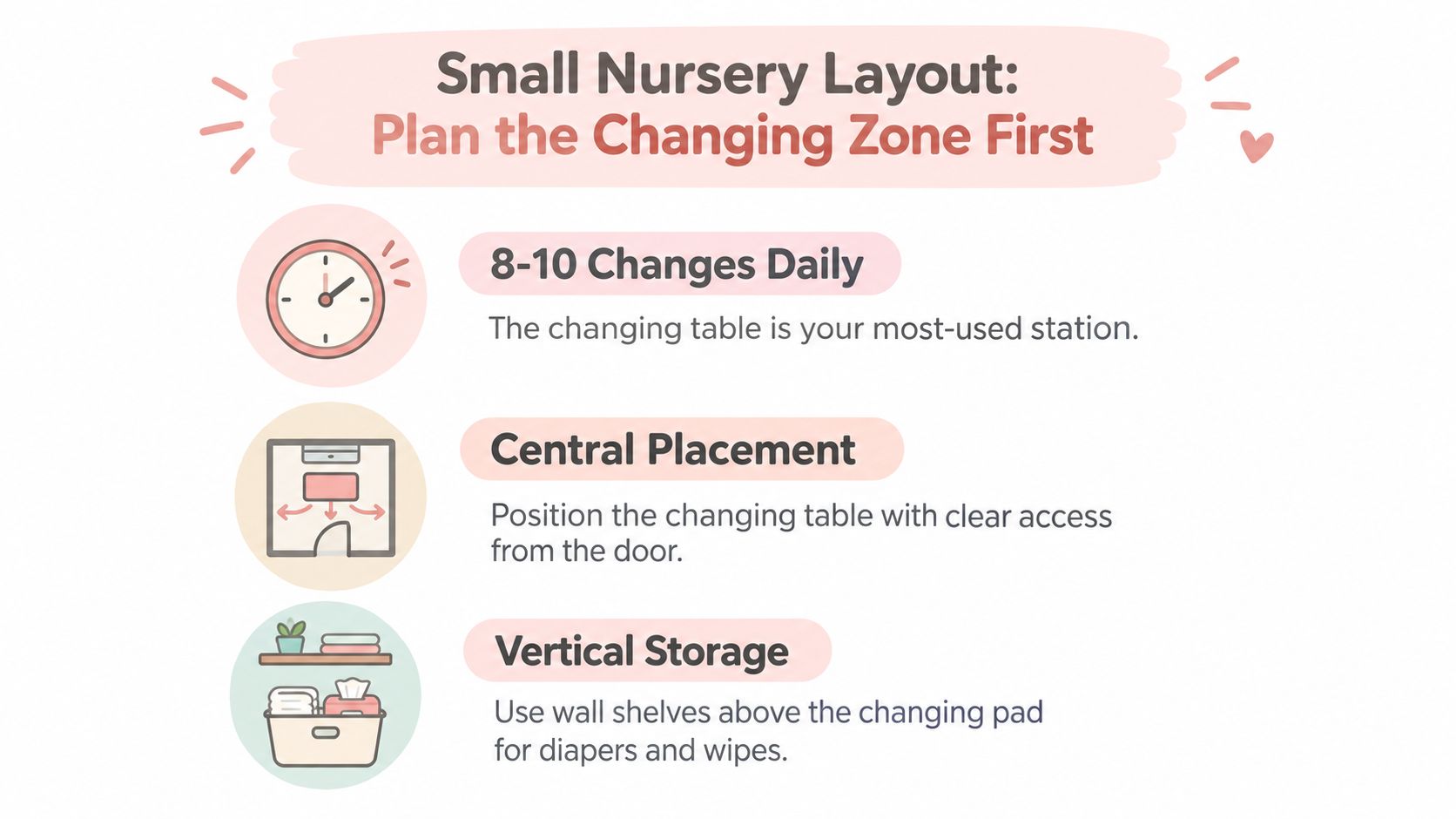
A small nursery needs a workable route before it needs more furniture. Stand where you will change the baby, open the drawers, turn toward the crib, and check whether the door remains clear. If the changing table forces you to sidestep around the crib during every diaper change, the layout is wrong, even if all the pieces technically fit.
Place the crib along the longest uninterrupted wall, with its access side open. Position the changing table or integrated changing area where you can reach the baby and supplies without twisting away. Keep the door swing, closet access, and a clear walking path in view before choosing the final position.
Use the walls, not every inch of floor
Build storage vertically. A narrow bookcase, wall shelves, or a diaper tower can hold wipes, creams, clothes, and books while preserving room for a hamper, basket, or glider. Store the items used at every change within one-handed reach. Decorative pieces can go higher.
Use this compact arrangement as a starting point:
- Keep the crib accessible: Leave enough room beside the frame to change sheets and lift the baby without squeezing between furniture.
- Set the changing zone nearby: A perpendicular position can shorten the reach between the baby and supplies while keeping a usable passage.
- Protect the work area: Do not place the changing surface where an open door, drawer, or closet blocks your stance.
- Reserve flexible floor space: An empty corner can serve changing routines, laundry, or movement as your child grows.
A convertible crib earns its floor space only when the later stages fit your plan. In a studio apartment, a 4-in-1 design can keep the main footprint stable and may avoid a separate toddler-bed purchase. Check that the conversion rails are included or available, then choose a safe storage spot for parts you will not use immediately. The upfront price matters less than the usable years each configuration provides.
For a fuller room-planning reference, review this guide to small-space nursery furniture.
Mark every footprint with painter's tape before ordering. Open the drawers, doors, and closet, then walk the route while carrying a laundry basket. That test exposes blocked access before the furniture arrives.
Materials, Budget, and Day-to-Day Maintenance
Material decisions become obvious during the toddler years. Hardwood frames such as oak, beech, or maple generally feel heavier and more substantial than low-grade MDF with a paper veneer, while sealed finishes can simplify cleaning. In humid rooms, pay close attention to the finish and the manufacturer's care instructions, especially if the crib will sit near a window.
Don't treat an attractive finish as proof of construction quality. Look at the joinery, the weight of the hardware, the stability of the mattress support, and how cleanly the conversion parts align. A low purchase price can become frustrating if bolts strip, rails wobble, or the instructions don't clearly identify each stage.
Match the material to your home
| Material or Finish | Budget Tier | Maintenance Trade-Off |
|---|---|---|
| Hardwood frame | Higher | Heavier to move, but straightforward to wipe and inspect |
| Sealed laminate | Mid-range | Practical for rentals and simple to clean |
| MDF with paper veneer | Entry-level | Requires careful moisture control and edge inspection |
| Low-VOC finish | Varies | Check the product documentation and follow its care guidance |
| Untreated wood | Varies | More vulnerable to moisture and staining |
Budget should follow the years of use you expect, not just the newborn photograph. If you want a later bed configuration, prioritize conversion quality and replacement-part availability over decorative details. If you expect to move soon, prioritize manageable weight, protected edges, and a finish that won't demand special treatment.
Parents researching nursery categories and finishes can use this nursery furniture brands guide for 2026 as additional planning material. Treat any guide as a starting point, then verify the exact product specifications, included hardware, and care instructions for the piece you're considering.
Keep maintenance simple
Use a damp microfiber cloth for routine cleaning, then dry the surface rather than allowing moisture to sit on seams or edges. Check hardware whenever you change the crib configuration, and inspect the changing attachment after cleaning or moving the furniture.
Skip wax-heavy treatments if you frequently need one-handed overnight cleanup. The best maintenance routine is the one you'll repeat: wipe spills promptly, keep the changing surface cleanable, and tighten hardware only according to the manual.
Registry Timing and When to Transition Away
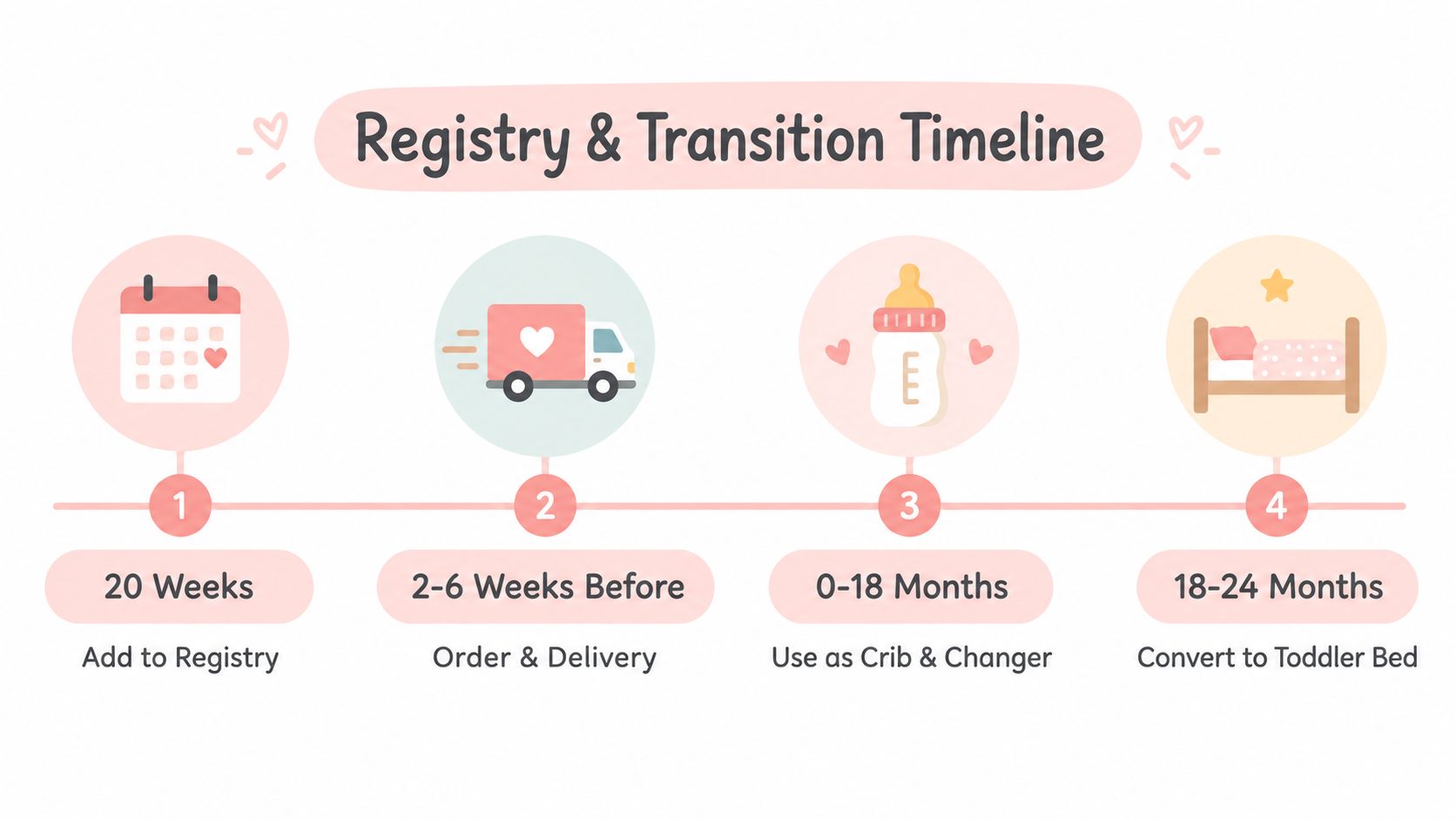
Add the convertible crib to the registry around 20 weeks, after the anatomy scan and before late-pregnancy fatigue makes furniture research harder. Order early enough to allow for delivery, because stocked cribs may require two to six weeks, while custom finishes can take 12 weeks. Those lead times are planning guidance, so confirm the current estimate for the exact finish and model before placing the order.
Put the crib and the initial conversion information on the main registry. You can delay purchasing later-stage hardware if the manufacturer allows it, but verify that the parts will remain available. Add a waterproof mattress protector at the beginning rather than waiting for the first leak.
Plan the handoffs before they happen
The changing surface typically leaves daily use when your child reaches the product's weight limit or becomes active enough that the station no longer fits your routine. That transition can happen between 12 and 24 months, so choose a dresser that remains useful without its topper.
A toddler-bed move is often driven by climbing or escape attempts rather than a fixed birthday. Many children transition between 18 months and three years, but the product manual and your child's behavior should guide the decision. Store the changing hardware in a labeled bin, keep the crib instructions with it, and check every rail before assembly.
Your registry should reflect the whole lifecycle:
- Main purchase: Convertible crib, changing surface, mattress, and protector.
- Later conversion: Toddler guardrail and any required daybed or bed rails.
- Storage plan: Labeled bags for bolts, dowels, brackets, and instructions.
- Future-use test: Dresser storage and frame quality should still make sense after diapering ends.
A convertible crib and changing table is worth buying when it solves a real space problem and its later stages match your family's plans. If you're only attracted to the changing topper, choose more cautiously. The crib frame and long-term storage are what determine whether the purchase keeps earning its place.
NINI and LOLI offers a curated selection of nursery furniture, cribs, bedding, and other baby essentials for families preparing a practical, polished space. Visit NINI and LOLI to browse nursery options and get help choosing pieces that fit your room, routine, and child's next stage.