


A baby sleep sack is a wearable blanket that keeps baby warm without loose bedding, and common sleep sack warmth levels run from 0.5 to 3.5 TOG. It fits today's safe-sleep guidance because soft loose items should stay out of a baby's sleep space, while infant sleep clothing such as a wearable blanket or sleep sack can be used instead.
If you're getting a nursery ready, or standing over a crib wondering how your baby is supposed to stay warm without a blanket, you're asking the right question. A sleep sack looks simple, but the decision behind it usually isn't just about style or softness. It's about choosing something that matches your baby's size, your room temperature, and the stage you're in right now.
That's also why this product confuses so many new parents. One sleep sack can look almost identical to another, yet the main difference may come down to fit and warmth level, not extra features. If you're ready to narrow your options with confidence, you can browse baby sleep and nursery guidance while planning what belongs in your baby's sleep setup.
Introduction to What a Baby Sleep Sack Really Is
It is 2 a.m., your baby is finally sleepy, and one question still hangs in the room. How do you keep them warm if the crib should stay free of loose blankets?
A baby sleep sack answers that question by acting as a blanket your baby wears. It goes over pajamas, stays on the body, and helps keep the sleep space clear of extra fabric. Safe-sleep guidance also supports keeping soft loose items out of an infant's sleep area and using infant sleep clothing, such as a wearable blanket or sleep sack, instead of a blanket for warmth.
That simple definition helps, but it does not tell you what matters most when choosing one.
For most families, a sleep sack is really a fit-and-temperature decision. Two sleep sacks can look nearly the same on a hanger, yet one may suit your baby well and the other may feel too roomy, too warm, or too light for the room. The right choice usually comes down to two practical questions. Does it fit your baby correctly, and does its warmth match the nursery temperature?
A helpful comparison is a coat for adults. A beautiful coat that is the wrong size or wrong weight for the weather does not feel good to wear. A sleep sack works the same way. Soft fabric and cute prints are nice, but safe, comfortable sleep starts with proper sizing and the right warmth level.
That is one reason sleep sacks have become such a common part of modern nurseries. They give parents a clear answer to the nightly question of what baby should wear to sleep, especially once you start thinking about the full setup, from the sleep space itself to crib and bassinet planning for your nursery.
A baby sleep sack is more than a product category. It is a simple way to dress a baby for sleep that works best when you choose for body fit and room temperature first.
Parents often apply that same thinking to the whole room. If you are also choosing textiles for curtains, gliders, or soft nursery accents, nursery fabric advice from The Fabric Company can help you compare comfort, texture, and everyday practicality.
How a Baby Sleep Sack Works and What Makes It Different
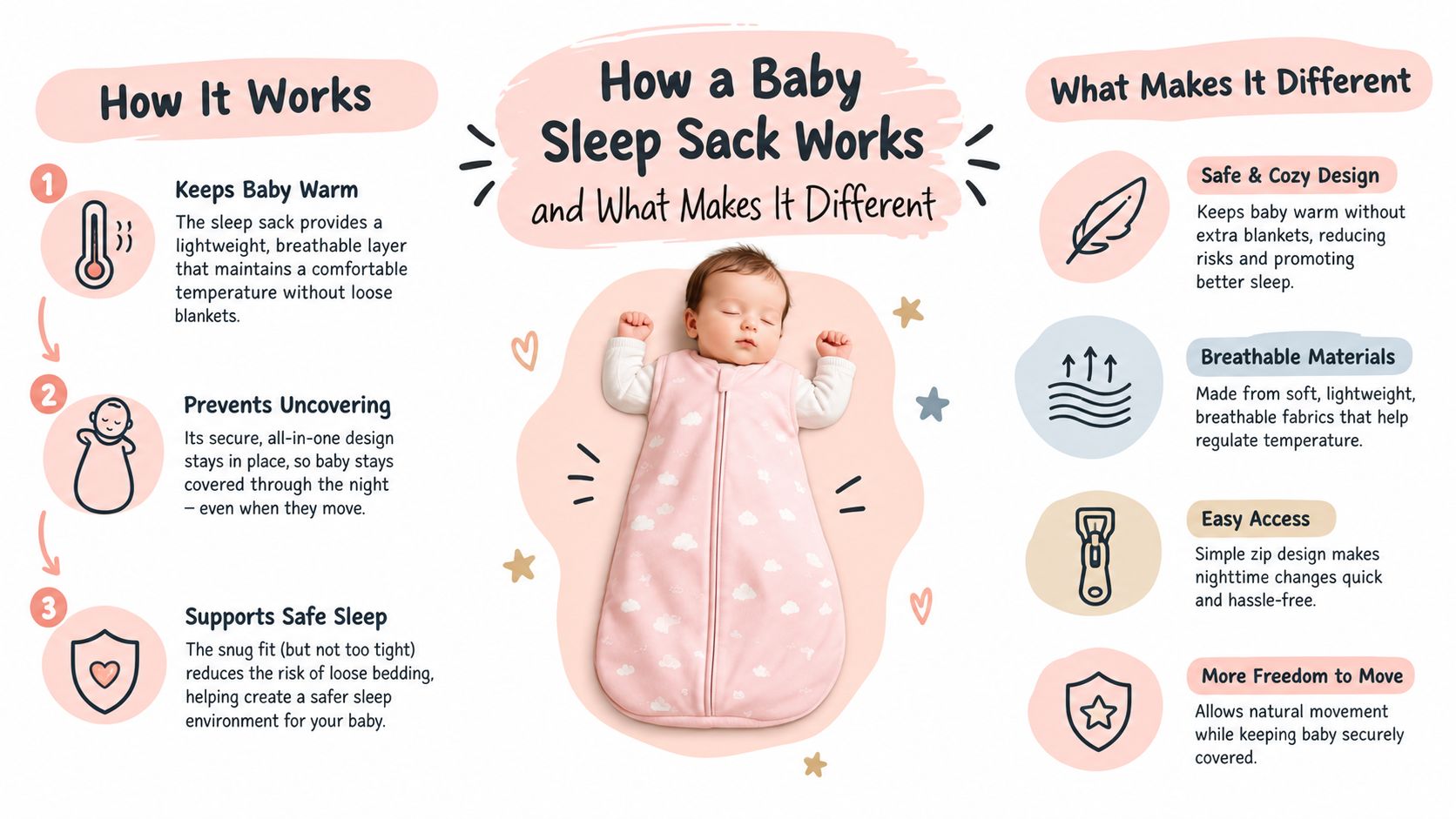
A baby sleep sack works like wearable bedding. You zip or fasten it onto your baby, and it covers the body from shoulders down while leaving the face uncovered. That design is the key difference.
What it actually does at bedtime
At bedtime, a sleep sack acts as your baby's sleep layer instead of a separate blanket. Because your baby wears it, the fabric stays with their body as they wiggle, stretch, or turn. A blanket can slide up, bunch, or kick off. A sleep sack is designed to stay put.
That difference sounds simple, but it changes how you shop for one. The goal is not just "a sack for sleep." The goal is a sack that fits properly at the neck and arm openings and provides the right level of warmth for the room.
You can picture it like choosing pajamas plus a light sleep cover in one piece. If the fit is too loose, the sack may not sit the way it should. If the warmth is too heavy for the nursery, baby may get too warm. If it is too light, baby may not stay comfortable through the night.
How it differs from other sleep coverings
Sleep sacks, swaddles, and loose blankets all relate to warmth, but they work in different ways.
- A sleep sack: Worn like sleepwear, usually with arms free and space for leg movement.
- A swaddle-style design: Wraps more closely around the body and needs careful use as baby grows and starts rolling.
- A loose blanket: Sits on top of the baby rather than being worn.
The biggest practical difference is movement. A well-fitted sleep sack lets babies move their arms and legs while keeping their sleep layer on. That is especially helpful once your baby becomes more active and bedtime clothing needs to stay simple, secure, and comfortable.
Practical rule: The best sleep sack for your baby is one that stays below the face, fits neatly at the openings, and matches the room temperature.
Parents who want a clearer picture of how sleep sacks fit into a full bedtime routine can also read this guide to better baby sleep with a sleep sack.
Why Parents Choose a Sleep Sack for Everyday Sleep
At 2 a.m., the question usually is not “Do we own enough baby sleep gear?” It is “Is my baby dressed comfortably for this room, and will that stay true until morning?” That is why many parents keep reaching for a sleep sack. It gives them one wearable sleep layer they can use night after night without guessing about a blanket slipping off or bunching up.
The everyday reasons parents keep reaching for one
The appeal is practical. A sleep sack helps turn bedtime clothing into a simple fit-and-temperature choice.
If the nursery runs cool, parents can choose a warmer sack. If the room stays warm, they can choose a lighter one. If baby tends to wiggle, the sleep layer still stays on because it is worn, not laid over them. That matters more in daily life than extra features that sound nice on a product page but do little to improve overnight comfort.
Parents often choose a sleep sack because it helps with:
- Consistent warmth: Baby can move around without losing the sleep layer.
- A simpler bedtime routine: Once the right sack is picked for the room, dressing for sleep becomes more repeatable.
- Comfort during active sleep: Babies can stretch, kick, and settle without the layer twisting off them.
- Less second-guessing: The focus shifts from “Should I add a blanket?” to “Is the TOG and fit right for tonight?”
That last point is the one many families value most. A sleep sack is not just a product category. It is a way to make the same decision each evening with more confidence.
Who tends to find a sleep sack especially useful
Some parents start using one early because they want a steady routine. Others only see the value after a few restless nights of adjusting pajamas, checking the room, and wondering whether baby is too warm or not warm enough.
It is often especially useful for:
- First-time parents who want a sleep layer that feels easier to repeat each night
- Families in homes with changing indoor temperatures where the nursery may feel different from one evening to the next
- Traveling families who want one familiar part of the bedtime routine away from home
- Gift shoppers who want to give something parents are likely to use often, not just once
For some families, the sleep sack becomes part of a larger routine. Pajamas, the right sack, dim lights, and a familiar sound cue can work together to make bedtime feel more predictable. If you are building that kind of setup, this portable baby sound machine guide for sleep routine ideas can help.
If you're also reading about shared-room sleep setups or keeping baby nearby in the early months, this guide to bed sharing essentials gives broader context around nighttime arrangements and what parents often consider when building a comfortable sleep routine.
A sleep sack earns its place in the drawer because parents use it to answer a very specific nightly question. What should my baby wear for this room tonight, in a size that fits properly and feels comfortable until morning?
Understanding TOG Ratings and Room Temperature Guidance
At 7:15 p.m., the house feels comfortable to you. By 2:00 a.m., the nursery may feel very different. That is why TOG works best as a room-temperature decision, not a shopping shortcut.
You already know TOG is the warmth guide. What matters here is how to use it at bedtime. A sleep sack should match the temperature of the room your baby is sleeping in, along with the pajamas underneath. The month on the calendar matters less than the nursery conditions tonight.
Air conditioning, old windows, ceiling fans, and upstairs bedrooms can all change how a room holds warmth. A summer nursery with strong AC can need a lighter pajama layer plus a warmer sleep sack than a mild spring room. The goal is balance. Comfortable sleep usually comes from the right mix of room temperature, sleep sack warmth, and simple sleepwear underneath.
Choosing TOG by Nursery Temperature
| TOG Rating | Room Temperature | Best For |
|---|---|---|
| 0.5 TOG | 24–27°C (75–80°F) | Warm nurseries and hotter indoor conditions |
| 1.0 TOG | 21–23°C (70–74°F) | Moderate room temperatures in many homes |
| 2.5 TOG | 16–20°C (61–68°F) | Cooler nurseries and stronger overnight cooling |
Use the chart as a starting point, not a rigid rule. Two babies can sleep in the same temperature but wear slightly different layers underneath based on age, sleepwear, and how warm the room stays through the night.
A simple way to choose is to start with the room, then build outward:
- Warm room: choose a lower-TOG sleep sack and keep under-layers light.
- Moderate room: a middle warmth level often gives the most flexibility.
- Cool room: choose a higher-TOG option that suits the indoor temperature, not the weather app.
- Rooms that shift: many families keep two warmth options so bedtime feels easier when seasons change or heating and cooling cycles vary.
Features can be helpful, but warmth comes first. A soft fabric, a pretty color, or a two-way zipper will not fix a sleep sack that is too warm or too light for the nursery. If you want a product example while comparing fabric, construction, and warmth choices, this sleep bag in sage is a useful reference point.
The best choice is the one that fits your baby's room tonight. That is what makes a sleep sack feel comfortable instead of confusing.
Finding the Right Size and Fit for Safe Comfort
You zip your baby in for the night, lay them down, and then pause. The room temperature is right, but the sack looks long, the neck opening seems a little loose, and suddenly the question is no longer “What sleep sack should I buy?” It is “Does this one fit my baby safely tonight?”
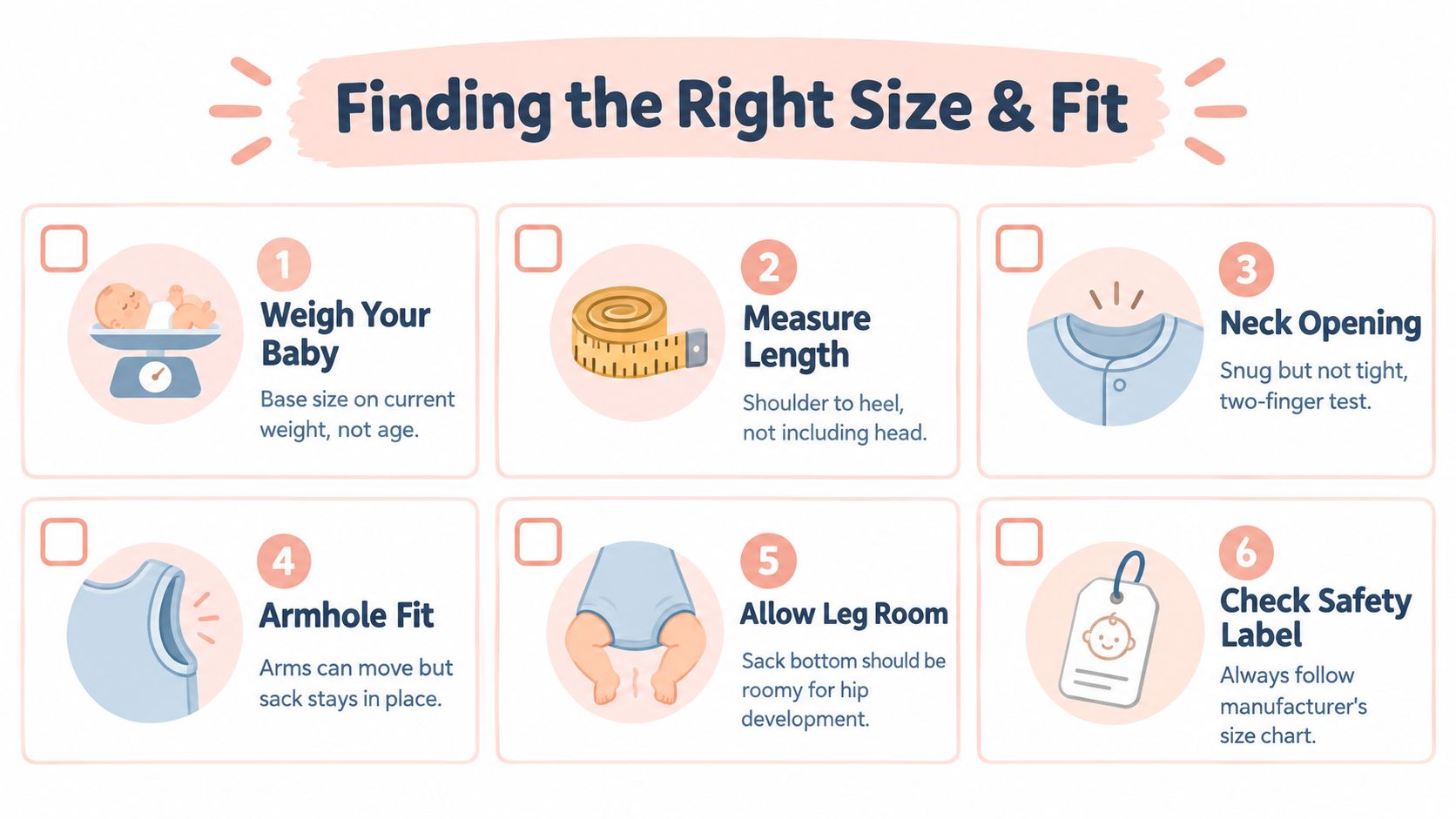
That is why fit matters so much. A sleep sack is not like buying a sweater one size up for later. It works more like a piece of sleep gear. The correct size needs to match your baby now, with enough room to move their legs comfortably and a secure enough upper fit to stay clear around the face.
Age on the label can help as a starting point, but it should not make the final decision. Weight and length usually give a clearer picture, especially because babies of the same age can fit very differently.
Too large versus too small
An oversized sleep sack can create extra space around the upper body and neckline. Public health safe-sleep guidance notes that loose sleepwear and overdressing can create safety concerns, which is why a secure fit matters just as much as the right warmth level, as described in this safe-sleep dressing guidance from Canada.
A too-small sleep sack causes a different problem. It can limit natural kicking, stretching, and leg movement, which matters more as babies become stronger and more active. Comfort is part of safety too, because a baby who cannot move easily is not wearing the sleep sack as intended.
What to check before you keep it
A good fit is usually easy to spot once you know what to look for:
- Check current measurements first: Use your baby's present weight and length before relying on age ranges alone.
- Look at the neckline: It should sit neatly and stay clear of the mouth and nose.
- Check the arm openings: They should allow movement without looking wide or gaping.
- Look at the lower half: There should be space for the legs to bend and kick comfortably.
- Check again after a growth spurt: A sleep sack that fit well last month may already be ready for the next size.
A simple rule helps here. Buy for the baby you are putting to bed now, not the baby you expect in two months.
For newborns, size charts often begin with early-month ranges based on smaller weights and shorter lengths, which is why checking the brand's chart against your baby's current measurements is more reliable than choosing by age alone.
If you are setting up the whole sleep space at once, this guide to fitted crib sheets is a helpful companion because both choices come back to the same idea: secure fit, simple care, and comfortable sleep.
How to Choose the Right Sleep Sack for Your Baby
At 2 a.m., many sleep sacks can look almost identical on your screen. Differences usually show up later, during a diaper change in low light, after a spit-up, or when the room feels warmer than expected. A smart choice is less about extra features and more about whether the sack will work well in your actual bedtime routine.
A practical way to compare options
Once you have already checked warmth level and size, the next step is usability. A sleep sack works like any piece of everyday baby clothing. If it is fussy to wash, awkward to open, or hard to keep in rotation, it often becomes a frustrating purchase even if it looked good on paper.
A helpful way to choose is to match the sleep sack to your evenings, not just to the product page.
Newborn and early months
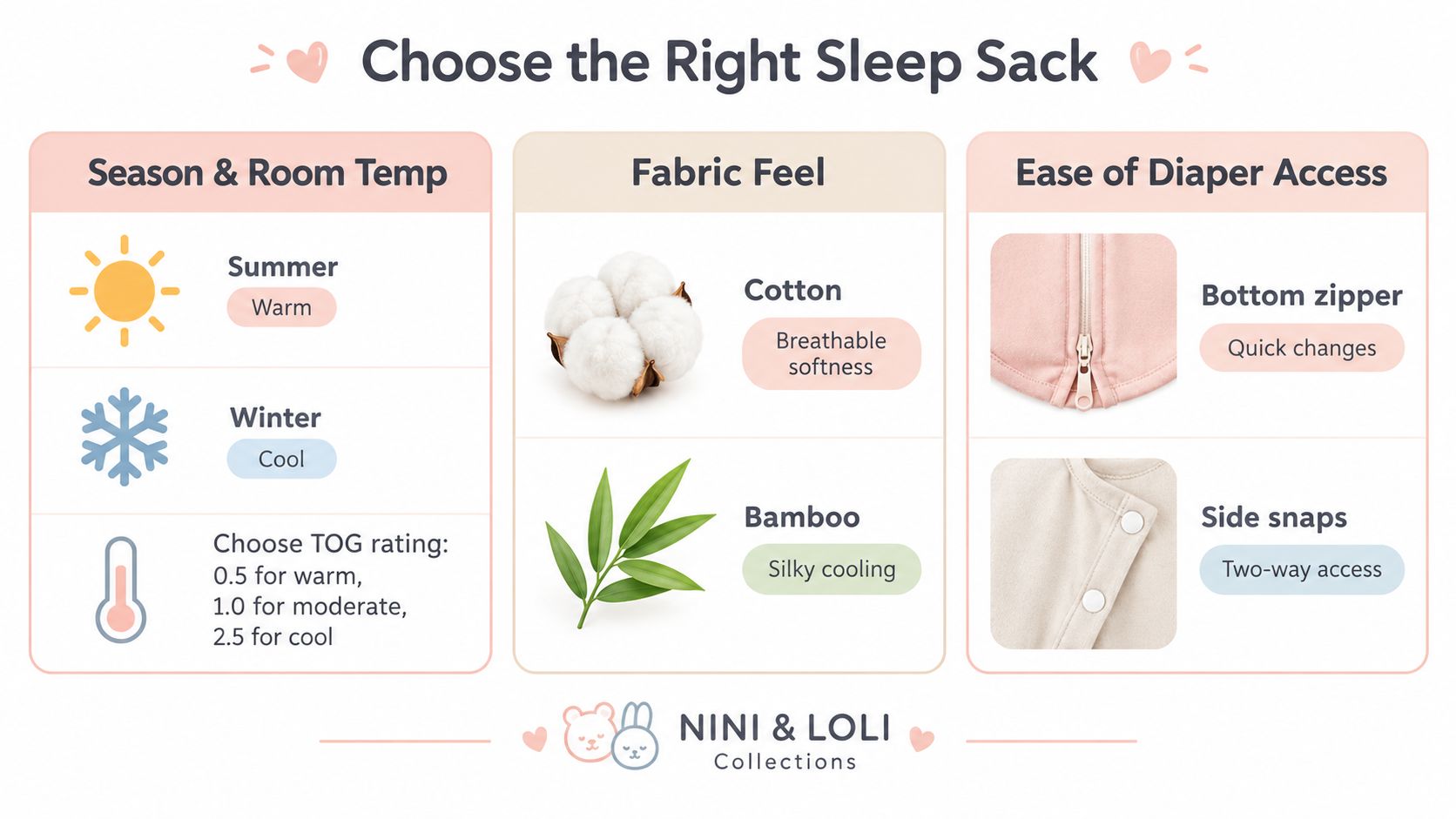
In the earliest stage, simple care matters a lot. Frequent laundry is common, so soft fabric that washes well and dries without much hassle can make daily life easier. A zipper that opens from the bottom can also help with overnight diaper changes without fully undressing your baby.
Infant stage
As babies get stronger and more active, comfort during movement becomes easier to notice. A sack should still feel calm and cozy, but it should also let you settle your baby into the crib without tugging, twisting, or bunching. This is also a good stage to check whether the same style comes in more than one TOG, so you can keep a familiar fit while seasons change.
Later baby and toddler routines
Older babies often do best with bedtime routines that feel predictable. If naps happen at daycare, a grandparent's house, or while traveling, parents often appreciate a sleep sack that is easy to pack, easy to identify, and easy for another caregiver to use correctly without extra explanation.
What to prioritize when several choices seem similar
If you are deciding between a few options, these details usually tell you more than prints or added features:
- Fabric care: Look for materials that feel comfortable against the skin and hold up well after repeated washing.
- Zipper design: Easy access for diaper changes can make nighttime routines calmer and quicker.
- Seasonal availability: It helps when the same general style is offered in lighter and warmer versions, so you do not have to start over each time the weather shifts.
- Routine fit: Consider where your baby sleeps most often, who handles bedtime, and whether the sack will be used mainly for overnight sleep, naps, or both.
- Simplicity: Clear, easy-to-use design often serves families better than extra add-ons.
NINI and LOLI carries sleep sacks with practical features such as 2-way zippers. That can be useful. The larger safety point is simpler. Parents shopping today should stay focused on standard, non-weighted sleep sacks, as noted earlier.
Keep the final decision clear
If two options both meet your temperature and sizing needs, choose the one that will be easiest to use well, night after night. The best purchase is often the one you can wash, zip, and reach for without second-guessing.
That is what makes a sleep sack a good fit for real life, not just a good-looking product.
Confident Next Steps for Choosing Your Sleep Sack
It is 7:15 p.m., your baby is tired, and you want bedtime to feel simple. At that moment, the best sleep sack is usually the one you can choose quickly, use correctly, and trust without second-guessing.
Keep the final decision centered on one sentence: pick the option that matches your room temperature, your baby's current size, and your real bedtime routine.
A helpful next step is to make your own three-part bedtime note before you buy. Write down the usual nursery temperature, your baby's current weight and length, and whether you need the sack mainly for overnight sleep, naps, or both. That turns shopping from browsing into matching. It also makes it much easier for a partner, grandparent, or caregiver to grab the right one without a long explanation.
If you are deciding between two sleep sacks that both seem suitable, use a real-life test. Ask yourself which one would still feel straightforward at 2 a.m. after a diaper change. Clear sizing, easy-care fabric, and a zipper design you can manage in low light often matter more than extra details that look appealing on the product page.
That is usually where confidence comes from. Not from finding the one with the most features, but from choosing one that fits your baby, suits the room, and works smoothly in your home.
NINI and LOLI offers a thoughtfully curated range of baby essentials for sleep, nursery setup, and everyday care, so you can choose practical pieces with more confidence and less guesswork. If you're ready to find a sleep sack that matches your baby's stage, your room temperature, and your routine, visit NINI and LOLI and explore your options.